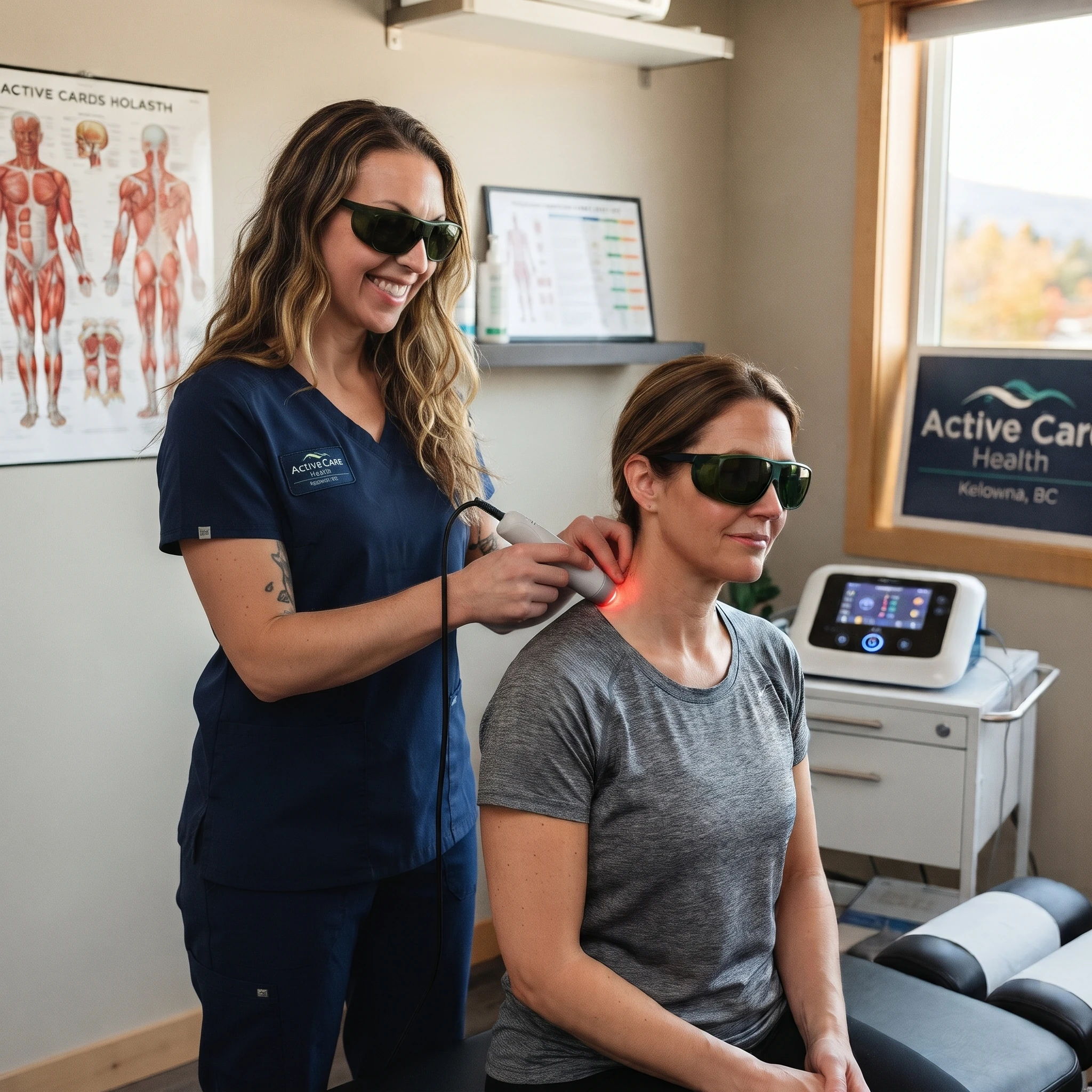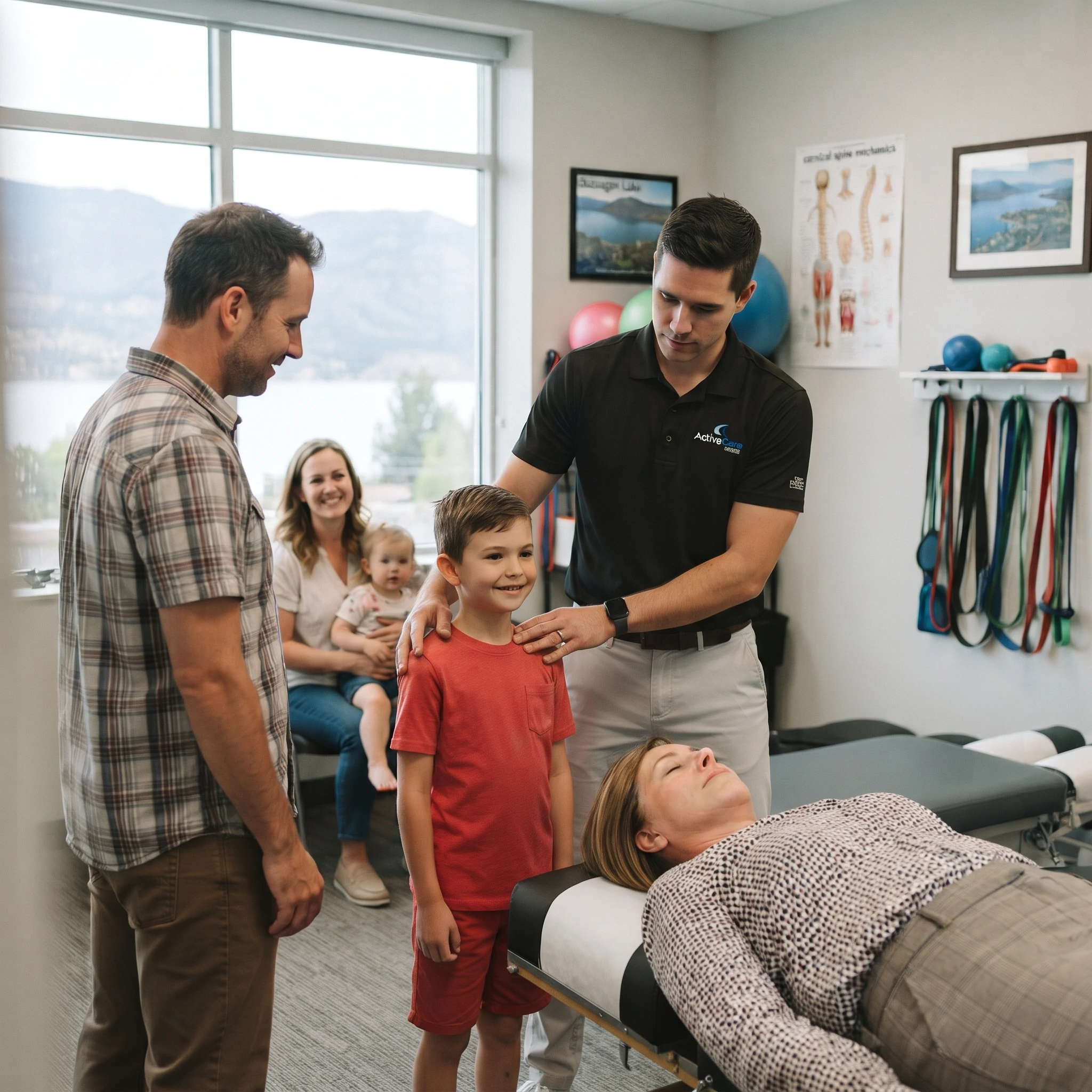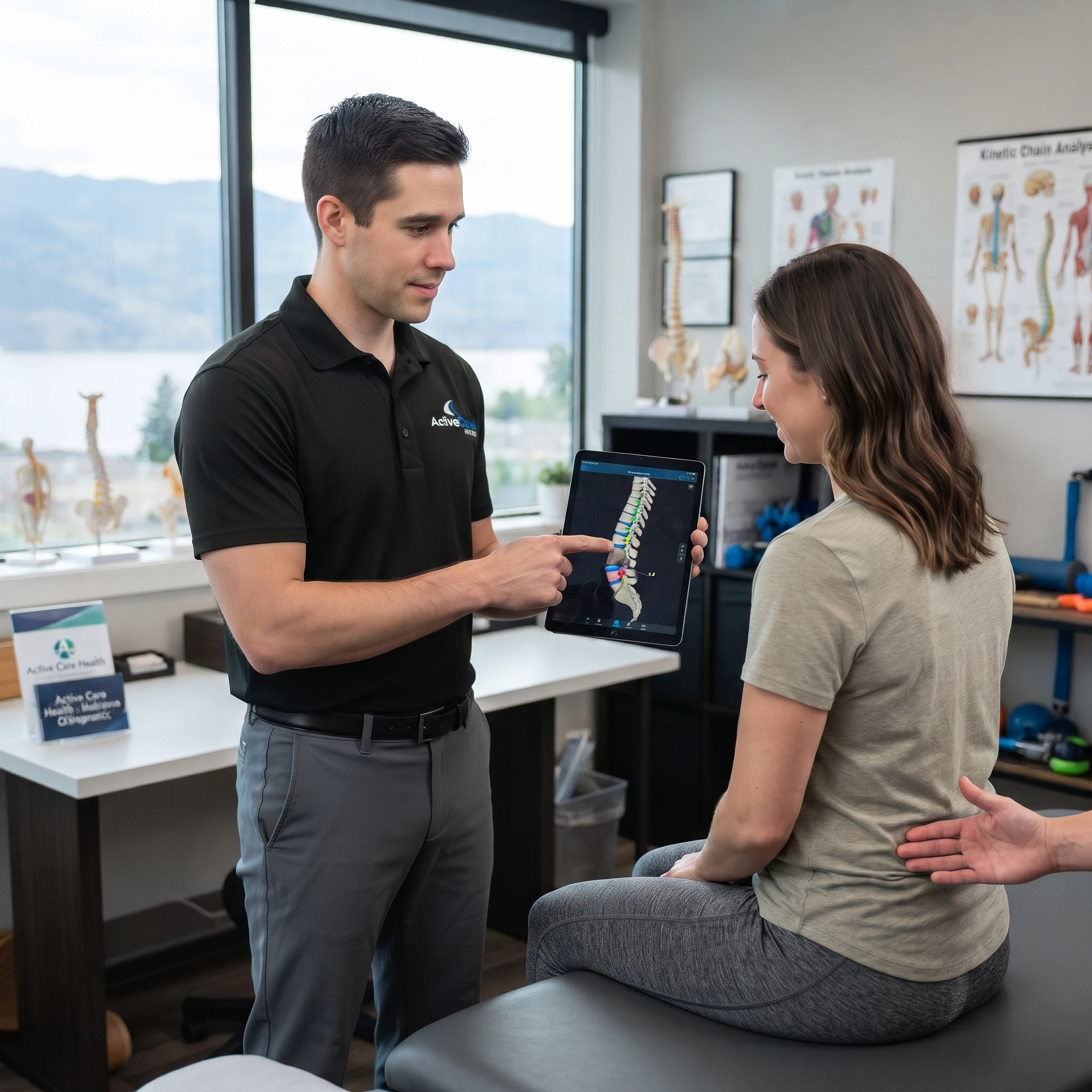
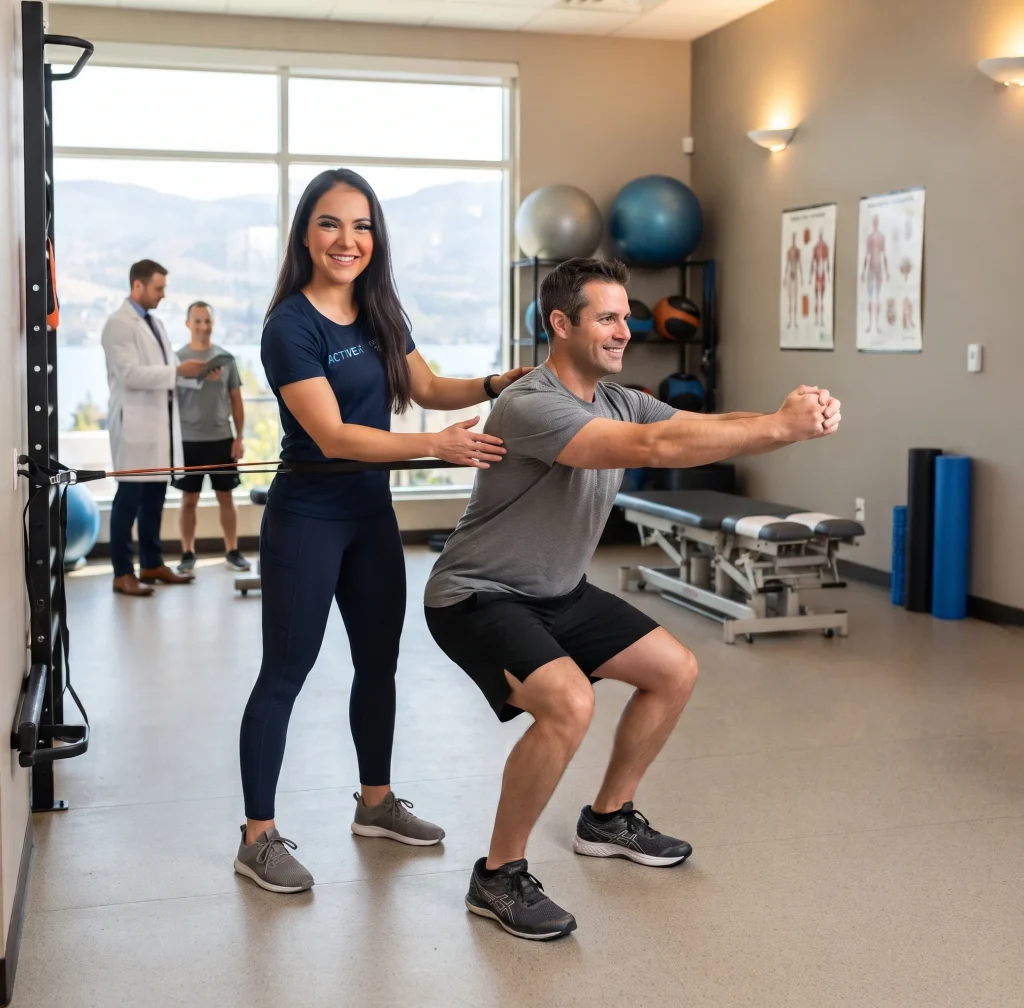
Key Takeaway: Active rehabilitation bridges the gap between passive symptom management and permanent structural resilience. By collaborating with a Kelowna Kinesiologist, patients integrate targeted movement mechanics and functional strength conditioning with clinical treatments from a Kelowna chiropractor at Active Care Health. This multidisciplinary approach ensures sustained mobility, prevents chronic recurrence, and optimizes neuromuscular performance.
Introduction to Clinical Rehabilitation
Transitioning from passive pain relief to active recovery is the most critical step in long-term healing. Clinical experience demonstrates that while initial symptom reduction requires clinical interventions, true functional restoration demands active patient participation. When an injury occurs, the neuromuscular system often adopts protective compensatory patterns. These adaptations reduce immediate discomfort but frequently introduce biomechanical imbalances that predispose the individual to secondary injuries.
Clinical rehabilitation focuses on dismantling these compensatory habits through structured physical interventions. A patient who relies exclusively on passive modalities often experiences recurrent symptom flares because the underlying mechanical deficiencies remain unaddressed. Therefore, integrating a qualified movement specialist into the recovery continuum is essential. Collaborating with a Kelowna Kinesiologist allows patients to rebuild functional strength and correct faulty movement mechanics. This systematic progression transforms clinical improvements into enduring physical capacity.
The Neuromuscular Foundations of Functional Movement
Human movement relies on intricate feedback loops between the central nervous system, the peripheral nervous system, and the musculoskeletal apparatus. When pain or trauma disrupts this loop, proprioceptive acuity diminishes. Kinesiology applies the science of human movement to evaluate and retrain these neuromuscular pathways.
Principles of Motor Control and Motor Learning
Motor control encompasses the physiological mechanisms that regulate posture and movement. Motor learning involves a set of processes associated with practice or experience leading to relatively permanent changes in skill execution.
- Neuroplastic adaptation occurs when repetitive, precise movement patterns replace dysfunctional motor engrams.
- Proprioceptive recalibration re-establishes accurate joint position sense in damaged or arthritic articulations.
- Neuromuscular coordination ensures prime movers, synergists, and stabilizers activate in the correct temporal sequence.
Biomechanical Assessment Methodologies
Kinesiologists employ comprehensive screening protocols to identify kinetic chain dysfunctions before they manifest as overt tissue pathology.
- Functional movement screening isolates asymmetries in bilateral squatting, stepping, and lunging patterns.
- Range of motion measurements quantify joint mobility restrictions across sagittal, frontal, and transverse planes.
- Strength and endurance profiling detects localized deficits in stabilizing musculature that compromise spinal integrity.
Phases of Functional Movement Transition and Exercise Progression
Structuring rehabilitation requires a methodical approach that respects tissue healing timelines while progressively increasing physiological demands. The following framework outlines the phases of functional movement transition and exercise progression utilized in clinical practice.
| Phase | Primary Objective | Target Physiological Adaptation | Representative Modalities |
| Phase One: Early Integration | Restore baseline mobility and reduce neuromuscular guarding | Downregulation of hypertonic tissue, initial proprioceptive activation | Isometrics, assisted range of motion, gentle stability drills |
| Phase Two: Strength Development | Rebuild localized muscular endurance and foundational strength | Hypertrophy of stabilizing units, enhanced intramuscular coordination | Open and closed kinetic chain exercises, resistance bands |
| Phase Three: Movement Integration | Retrain complex multi-joint movement patterns | Intermuscular coordination, optimization of kinetic chain transfer | Functional compound lifts, dynamic balance drills, gait retraining |
| Phase Four: Advanced Resilience | Prepare tissues for high-load vocational or athletic demands | Tendon stiffness adaptation, power generation, fatigue resistance | Plyometrics, sport-specific agility drills, loaded carries |
Clinical Synergy: Kinesiology and Chiropractic Care
Comprehensive patient care requires bridging the expertise of distinct clinical disciplines. Exercise rehabilitation complements the spinal adjustments provided by a Kelowna Chiropractor at Active Care Health, ensuring that patients achieve lasting mobility and injury resilience.
The Role of Spinal Adjustments in Joint Mechanics
Misalignments and joint restrictions alter normal arthrokinematics, causing abnormal stress distributions across adjacent spinal segments and peripheral joints. A Kelowna Chiropractor utilizes targeted spinal adjustments to restore proper joint play, reduce nociceptive signaling, and stimulate mechanoreceptors within the joint capsule. This mechanical correction creates a favorable neural environment by reducing hypertonicity in surrounding paraspinal musculature.
However, a spinal adjustment alone does not automatically reprogram the motor cortex to abandon ingrained movement faults. If a patient returns to daily activities with the same neuromuscular imbalances that contributed to the initial injury, the spinal joint will likely experience repetitive microtrauma and return to a restricted state.
The Integrating Function of Active Rehabilitation
Kinesiology provides the necessary active component to lock in the structural gains achieved through manual therapy.
- Stabilizing muscle engagement ensures that newly mobilized spinal segments receive adequate muscular support during dynamic loading.
- Movement pattern retraining replaces faulty motor programs, preventing the recurrence of joint fixations and muscle imbalances.
- Load tolerance progression gradually exposes connective tissues to higher mechanical thresholds, promoting collagen remodeling and structural reinforcement.
Key Indicators for Transitioning to Active Care
Determining the appropriate juncture to introduce active exercise into a treatment plan depends on specific clinical markers. Rushing into high-load exercise too early can exacerbate acute inflammation, whereas delaying active intervention prolongs recovery and fosters chronic deconditioning.
- Reduction of acute nociceptive pain to a manageable threshold where light movement does not provoke a severe inflammatory flare.
- Restoration of sufficient passive joint range of motion to perform foundational movement patterns without compensatory hinging.
- Demonstration of basic static motor control, such as the ability to maintain neutral spinal alignment during unloaded postural holds.
- Patient readiness and psychological willingness to engage in active rehabilitation and assume an active role in recovery.
- Clearance from clinical practitioners indicating that acute structural tissue healing has progressed past the vulnerability phase.
Frequently Asked Questions
How do kinesiologists collaborate with other clinical practitioners?
Kinesiologists operate within an integrated care model by communicating directly with chiropractors, physical therapists, and medical physicians. They review clinical findings, respect diagnostic imaging or movement restrictions, and design exercise programs that build directly upon the mechanical corrections achieved during manual therapy sessions.
Is exercise rehabilitation painful?
Rehabilitation exercises should not provoke sharp, worsening pain. Patients may experience mild muscular fatigue or dull discomfort associated with muscle conditioning, but any sharp joint pain, radiating symptoms, or post-exercise soreness lasting more than twenty-four hours indicates that the exercise volume or intensity requires modification.
How long does it take to transition from passive relief to independent home exercise?
The timeline varies based on the chronicity of the condition, tissue healing rates, and individual baseline fitness. Most patients begin introductory active stabilization within two to three weeks of initiating care, progressing toward an independent home program over a period of six to twelve weeks.
Can kinesiology help prevent future workplace or sports injuries?
Yes, functional movement training identifies and corrects biomechanical inefficiencies before they result in tissue failure. By improving movement economy, joint stability, and muscular endurance, patients develop greater resilience against the physical demands of daily life and athletic pursuits.
Do I need prior fitness experience to work with a kinesiologist?
Prior fitness experience is entirely unnecessary. Kinesiologists evaluate every patient individually, designing customized movement programs scaled precisely to current physical capabilities, age, and health status, ensuring safe progression from foundational stability to advanced activity.