Key Takeaway
Active Care Health in Kelowna provides preventative spinal care designed to maintain joint mobility, improve posture, and prevent chronic movement restrictions for patients of all ages. Clinical interventions focus on restoring biomechanical alignment and enhancing nervous system function through non-invasive techniques. Regular chiropractic evaluations support lifelong musculoskeletal health and physical independence.
Introduction to Spinal Health and Lifelong Mobility
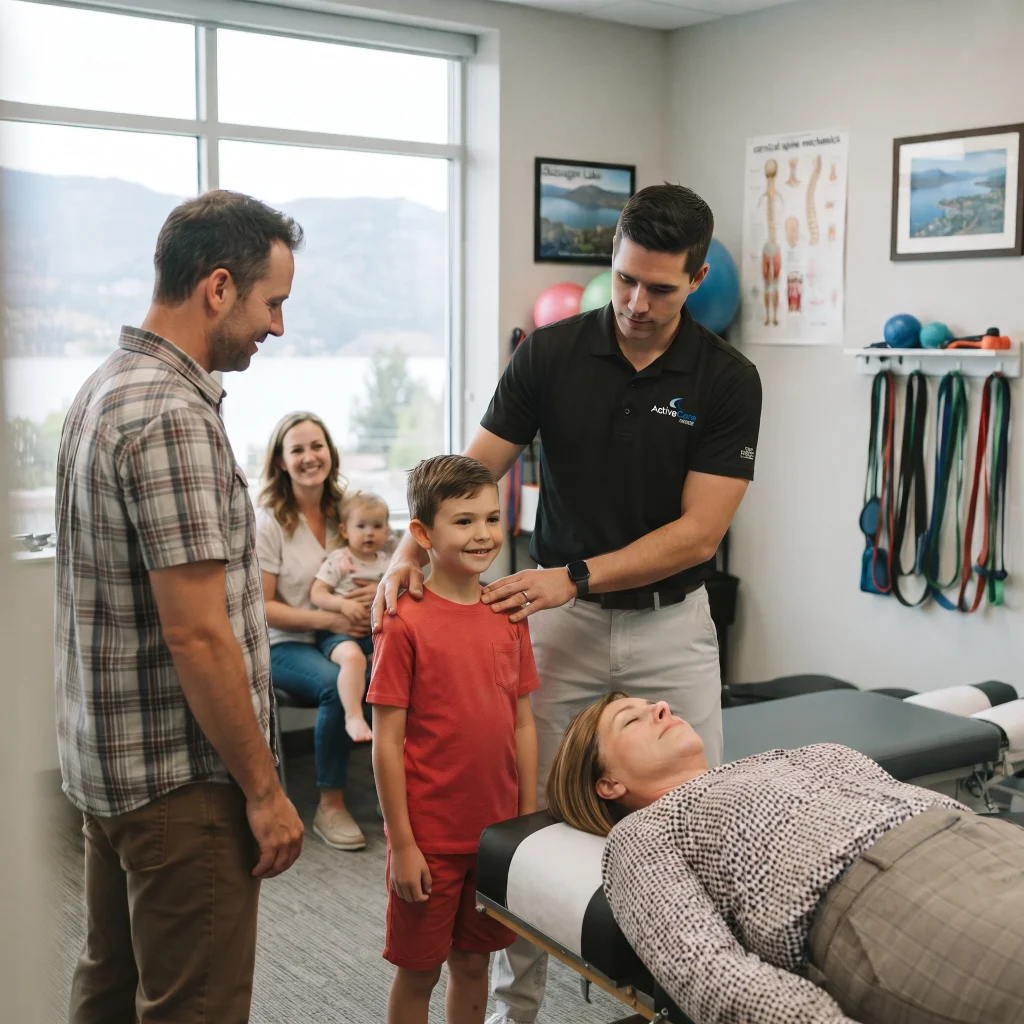
Spinal health is a foundational component of physical well-being that requires continuous attention throughout every stage of human development. Active families living in the Okanagan region often engage in diverse recreational pursuits, ranging from alpine skiing to mountain biking, which place repetitive mechanical demands on the musculoskeletal system. Engaging local Kelowna chiropractors ensures that mechanical dysfunctions are addressed before they manifest as chronic pain or structural degradation. Preventative clinical management focuses on maintaining optimal spinal alignment, preserving range of motion, and mitigating the cumulative wear and tear associated with daily physical activities.
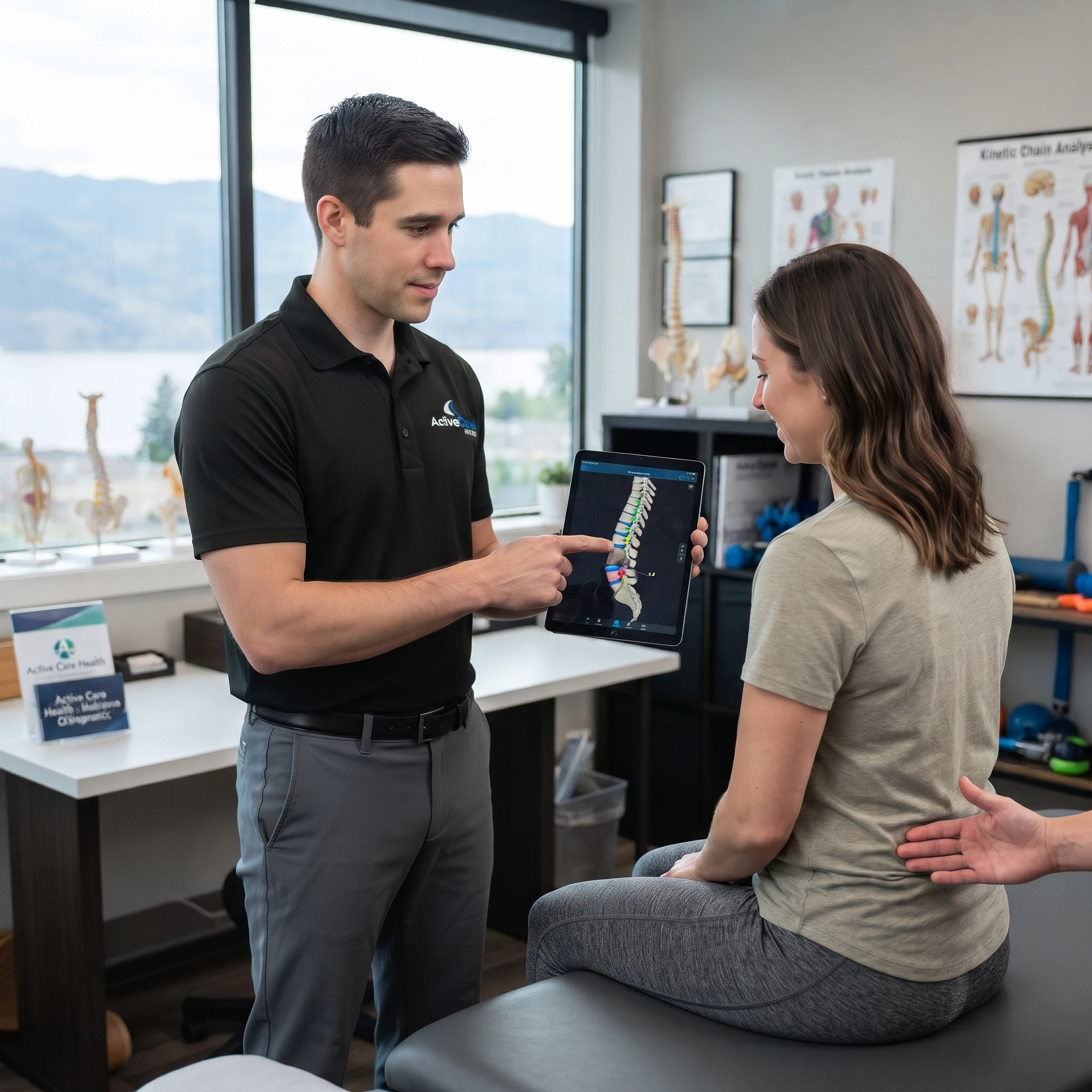
Biomechanical integrity allows the human body to distribute gravitational loads efficiently across the axial skeleton and appendicular joints. When spinal segments lose their normal physiological range of motion, compensatory movement patterns develop in adjacent joints. Over time, these compensations lead to accelerated articular cartilage wear, muscular imbalances, and functional limitations. Professional intervention by practitioners at Active Care Health involves comprehensive assessments of spinal mechanics, gait analysis, and functional movement screenings. By identifying early articular restrictions and neuromuscular imbalances, clinical strategies can be tailored to support long-term mobility across pediatric, adult, and geriatric populations.
The Biomechanics of Joint Mobility and Posture
Defining Articular Kinematics and Spinal Alignment
Articular kinematics refers to the geometric and mechanical study of joint motion, including displacement, velocity, and acceleration during movement. Spinal alignment dictates how mechanical forces are transmitted from the ground through the pelvis and up through the cervical vertebrae. When structural alignment is compromised, localized mechanical stress concentrates on specific intervertebral discs and facet joints. Active Care Health practitioners evaluate these kinematic chains to restore normal arthrokinematic gliding and reduce abnormal joint friction.
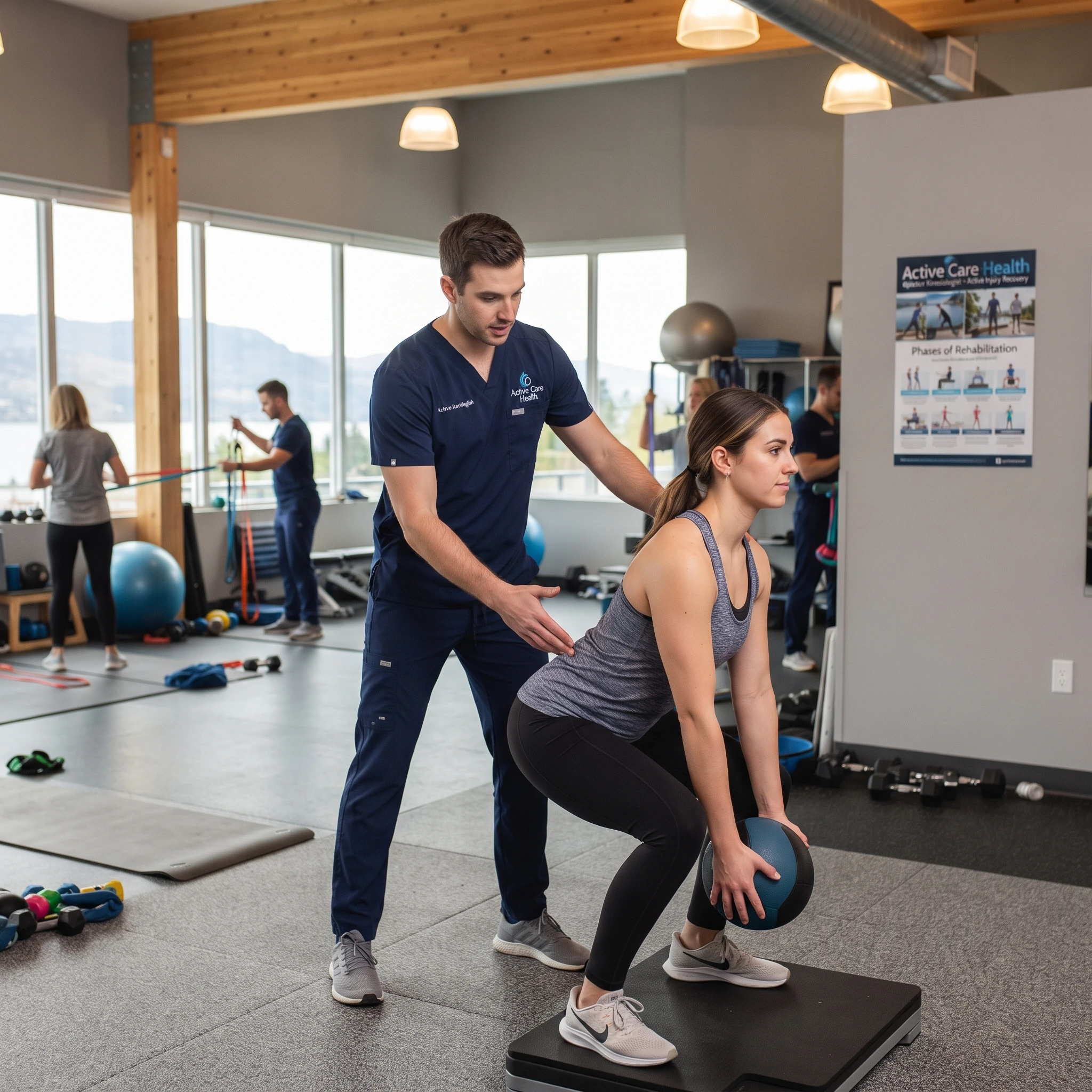
Maintaining proper posture is a dynamic neuromuscular process that counteracts gravitational forces acting upon the human body. Poor postural habits, such as prolonged forward head carriage or thoracic kyphosis, alter the center of gravity and increase the biomechanical load on the posterior spinal musculature. Over extended periods, this continuous isometric loading induces muscle fatigue, localized ischemia, and structural remodeling of connective tissues. Clinical management utilizes targeted spinal adjustments, myofascial release techniques, and functional rehabilitation protocols to restore normal spinal curves and alleviate chronic soft tissue strain.
Physiological Mechanisms of Chiropractic Adjustments
A chiropractic adjustment is a high-velocity, low-amplitude thrust applied to specific spinal segments exhibiting restricted motion or mechanical obstruction. This controlled mechanical force stimulates mechanoreceptors within the joint capsule and surrounding ligaments, sending neural feedback to the central nervous system. This afferent input inhibits nociceptive signaling, commonly referred to as the pain-gating mechanism, and reduces hypertonicity in paraspinal muscles.
Furthermore, the mechanical separation of articular surfaces during an adjustment creates a localized pressure drop within the synovial fluid, resulting in tribonucleation and the release of dissolved gases. Beyond immediate pain relief, this physiological process promotes synovial fluid circulation, which is essential for cartilage nutrition and waste removal. Enhanced joint mobility allows for improved proprioceptive feedback, which is critical for balance, coordination, and injury prevention in active individuals.
Preventative Care Strategies Across the Lifespan
Pediatric Spinal Health and Development
Pediatric spinal development undergoes significant milestones, from the infant developing cervical lordosis while learning to lift the head to the adolescent carrying heavy backpacks through school corridors. Early physical traumas, such as falls from playground equipment or sports-related impacts, can introduce micro-traumas to the developing spine. Local clinical care for children focuses on monitoring developmental milestones, evaluating spinal curvatures, and ensuring symmetrical musculoskeletal growth.
- Backpack Ergonomics: Ensuring children wear backpacks over both shoulders and that total pack weight does not exceed ten percent of the child’s body weight.
- Postural Education: Instructing children on neutral spine positioning during prolonged sitting and computer use.
- Trauma Screening: Conducting periodic evaluations following significant falls or sports collisions to detect asymptomatic spinal restrictions.
- Activity Modification: Encouraging diverse physical play to prevent repetitive strain injuries from early sports specialization.
Geriatric Care and Functional Independence
As individuals age, natural degenerative processes such as intervertebral disc desiccation, osteoarthritis, and sarcopenia contribute to reduced spinal flexibility and increased fall risk. Geriatric chiropractic care aims to preserve residual joint range of motion, enhance neuromuscular coordination, and maintain functional independence. Clinicians utilize modified, low-force adjustment techniques, gentle joint mobilizations, and patient-specific stabilization exercises tailored to older adults.
- Articular Decompression: Utilizing gentle distraction techniques to reduce pressure on degenerative lumbar discs and facet joints.
- Proprioceptive Training: Implementing balance exercises to stimulate vestibular and mechanoreceptive pathways, thereby reducing fall risks.
- Soft Tissue Management: Applying conservative myofascial therapies to address age-related fascial densification and muscle stiffness.
- Home Exercise Integration: Prescribing low-impact mobility routines to maintain core stability and spinal endurance.
Everyday Posture Habits for Families at Home
Maintaining musculoskeletal health requires consistent ergonomic practices and postural awareness within the home environment. Families can implement several practical strategies to minimize mechanical stress on the spine during daily routines.
- Ergonomic Workstations: Adjust chair heights and computer monitors so that the top third of the screen is at eye level, promoting a neutral cervical spine posture.
- Frequent Movement Breaks: Implement a rule to stand, stretch, and walk for two minutes every thirty minutes of sustained sitting.
- Proper Lifting Mechanics: Bend at the hips and knees while keeping loads close to the body’s center of mass during heavy lifting tasks.
- Supportive Sleep Surfaces: Select mattresses and pillows that support the natural curvatures of the spine in side or back sleeping positions.
- Core Stabilization Routines: Engage in short daily routines featuring planks and bird-dogs to reinforce deep abdominal and paraspinal muscle endurance.
Frequently Asked Questions
What are the primary indicators that a child requires a spinal evaluation?
Indicators include persistent asymmetrical posture, frequent complaints of localized back or neck discomfort, abnormal gait patterns, or a history of significant physical trauma from sports or falls. Early evaluation helps correct functional imbalances before structural adaptations occur.
Are chiropractic techniques safe for developing pediatric spines?
Yes, pediatric chiropractic techniques are highly modified, utilizing extremely gentle manual pressure or specialized instruments. Practitioners adjust the applied force to match the patient’s age, body weight, and developmental stage.
How does preventative chiropractic care benefit senior citizens with arthritis?
Preventative care helps maintain remaining joint motion, reduces compensatory muscle spasms, and improves proprioception. This management strategy assists older adults in performing activities of daily living with reduced discomfort and enhanced stability.
Can spinal adjustments reverse degenerative disc disease?
Chiropractic care cannot reverse structural disc degeneration or osteoarthritis, but it can improve joint mechanics, reduce abnormal mechanical stress on adjacent segments, and alleviate associated inflammation and pain.
How often should an active family undergo preventative chiropractic check-ups?
The frequency of preventative evaluations varies based on individual activity levels, occupational demands, and history of trauma. Many families schedule wellness assessments on a quarterly basis to monitor biomechanical function and address minor restrictions proactively.