-
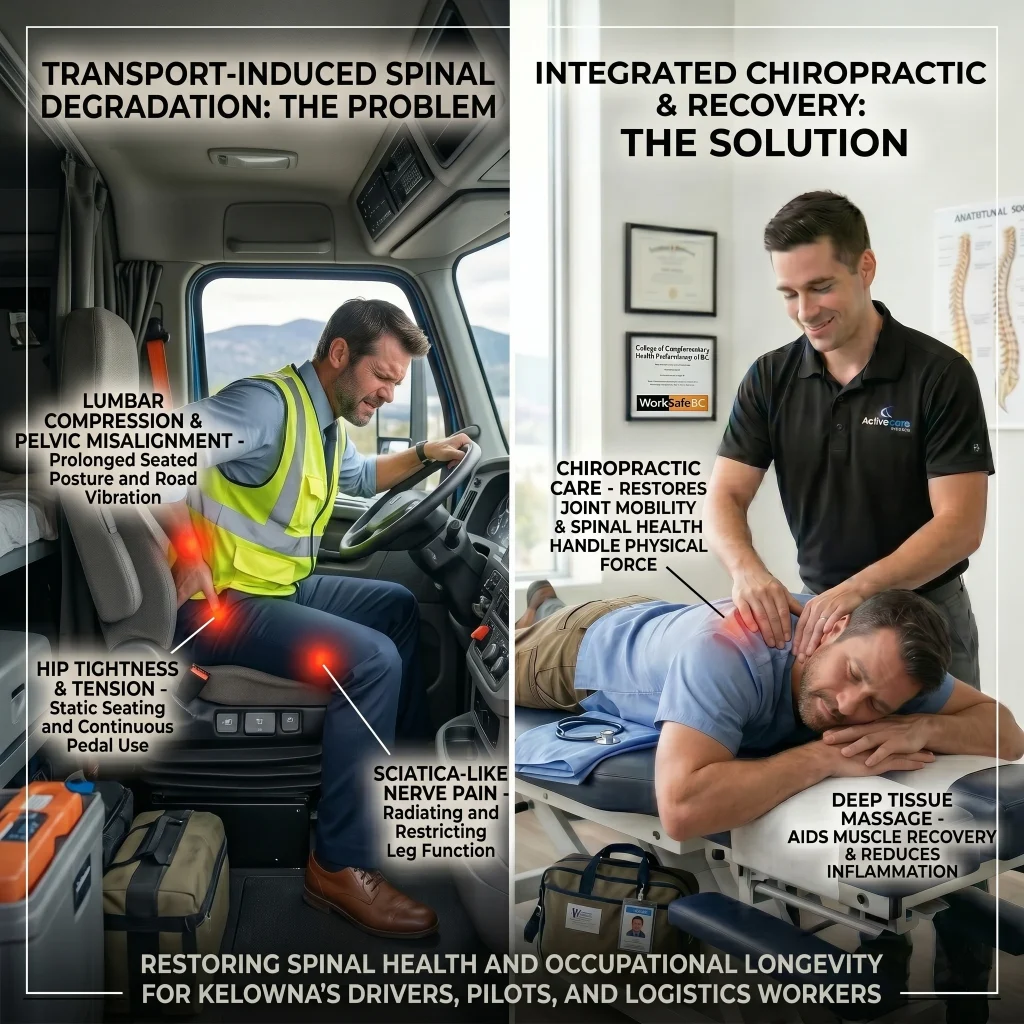
Transport professionals in Kelowna who experience prolonged
sitting and vehicle vibrations are susceptible to sciatica and spinal
compression. Kelowna
Chiropractic care addresses these pelvic misalignments and restores
circulation restricted during long shifts. By utilizing targeted spinal
adjustments, practitioners mitigate the physical toll of commercial driving and
aviation, ensuring spinal health and occupational longevity for the regional
workforce.
The Impact of Occupational Vibration on Spinal Integrity in Kelowna
Kelowna serves as a central transportation hub for the
Okanagan Valley, necessitating long-duration operation of heavy machinery,
delivery trucks, and aircraft. These occupations require individuals to remain
in a seated position for extended periods while the body absorbs low-frequency
vehicle vibrations. This combination of static posture and kinetic energy leads
to specific musculoskeletal degradations.Mechanisms of Vibration-Induced Spinal Compression
Vibration-induced spinal compression is a phenomenon where
repetitive mechanical oscillations cause the intervertebral discs to lose fluid
and height. When a driver or pilot is seated, the spine lacks the natural shock
absorption provided by the legs. The constant micro-trauma from road or air
turbulence accelerates wear on the fibrocartilage, potentially leading to disc
herniation or chronic inflammation of the surrounding ligaments.Pathophysiology of Prolonged Seated Positions
Prolonged seated positioning is a primary contributor to
pelvic and lumbar dysfunction among delivery workers and long-haul transport
staff. When the body remains seated, certain muscle groups, such as the hip
flexors, remain in a shortened state while the gluteal muscles and hamstrings
are inhibited. This imbalance creates a mechanical pull on the pelvis, leading
to misalignment.Sciatica and Hip Tightness in Transport Occupations
Sciatica is a condition characterized by pain radiating
along the sciatic nerve, which runs from the lower back through the hips and
down each leg. For professionals in Kelowna, this is often caused by the
compression of the nerve due to pelvic misalignments or inflammation of the
piriformis muscle. Hip tightness further exacerbates this issue by restricting
the range of motion in the sacroiliac joints, which are critical for
maintaining a stable spinal base during vehicle operation.Clinical Benefits of Combined Chiropractic and Massage Therapy
Chiropractic care is a healthcare discipline focused on the
diagnosis and treatment of neuromuscular disorders, with an emphasis on
treatment through manual adjustment and manipulation of the spine. For
transport workers, these adjustments focus on restoring the proper alignment of
the pelvis and lumbar vertebrae.- Spinal
Realignment – Manual adjustments reduce the pressure on compressed
nerves and restore joint mobility. - Circulation
Improvement – Massage therapy, when integrated with chiropractic care,
stimulates blood flow to tissues that have been compressed during long
shifts. - Reduction
of Hypertonicity – Targeted soft tissue work releases muscular tension
that contributes to skeletal misalignment.
Technical Framework for Selecting Chiropractic Care
Professional standards for a chiropractor are maintained by
Active Care Health in the Kelowna region through rigorous adherence to clinical
protocols. When evaluating a provider in this field, residents should utilize
the following technical framework:- Comprehensive
Biomechanical Assessment – The provider must conduct a physical
examination that includes gait analysis and spinal palpation. - Diagnostic
Imaging Integration – A professional should have the capability to
review or request X-rays or MRI scans to confirm structural integrity. - Specialized
Adjustment Techniques – The practitioner should utilize evidence-based
methods such as Diversified Technique or Activator Methods tailored to
spinal compression. - Soft
Tissue Protocol – The inclusion of myofascial release or massage
therapy is necessary to address the muscular components of spinal
dysfunction. - Quantifiable
Progress Monitoring – A structured treatment plan must include
periodic re-evaluations to measure improvements in range of motion and
pain reduction.
- Spinal
Conclusion: Prioritizing Spinal Longevity for Kelowna Transport Professionals
The physical demands placed upon truck drivers, delivery workers, and pilots in Kelowna necessitate a proactive approach to musculoskeletal health. As established, the combination of prolonged static seating and continuous vehicle vibration creates a specific physiological profile characterized by spinal compression and pelvic instability. Without clinical intervention, these conditions often progress from acute discomfort to chronic occupational injuries that can shorten a professional career.
Integrated chiropractic care serves as a critical mechanical countermeasure to these risks. By focusing on the precise realignment of the lumbar spine and pelvis, practitioners facilitate the restoration of normal joint function and nerve signaling. When combined with massage therapy to address restricted circulation and muscular hypertonicity, this dual approach provides a comprehensive recovery framework. Adherence to standards, Active Care Health ensures that transport professionals receive evidence-based care tailored to the unique rigors of their roles. Investing in regular spinal maintenance is not merely a matter of symptom management – it is a necessary strategy for maintaining long-term physical capacity and operational safety within the regional transportation sector.