Introduction to Biomechanical Strain in Physical Labor
Workers engaged in heavy manual labor subject their musculoskeletal systems to sustained mechanical loading. When foot mechanics deviate from physiological norms, the structural foundation of the entire kinetic chain becomes compromised. Poor arch stability and abnormal foot pronation alter the transmission of ground reaction forces, forcing proximal joints in the ankles, knees, hips, and spine to absorb excessive kinetic shock. Active Care Health evaluates these gait irregularities to determine the clinical utility of specialized interventions, such as custom orthotics, which provide targeted support and mitigate occupational musculoskeletal strain.
The Biomechanics of the Kinetic Chain
Defining the Kinetic Chain in Human Locomotion
The kinetic chain refers to the interdependent system of connected segments in the human body, including joints, muscles, and skeletal elements, that work together during movement. Disruption at the most distal segment – the foot – inevitably alters kinematics and kinetics throughout the proximal chain.
When a worker stands or walks, the foot acts as the primary interface with the ground. If the foot exhibits structural abnormalities, such as excessive pronation or supination, the tibia and femur undergo compensatory internal or external rotation. This rotational stress travels upward, altering pelvic alignment and increasing lumbar shear forces. Consequently, lower limb misalignment frequently manifests as chronic discomfort far removed from the foot itself, impacting the lower back and hips during labor-intensive tasks.
Plantar Pressure Distribution and Gait Stabilization
Plantar pressure distribution dictates how forces are transmitted across the plantar fascia and metatarsal heads during the gait cycle. Uneven pressure concentrations accelerate localized tissue fatigue and joint wear.
Custom-prescribed orthotics are engineered to alter ground reaction forces by matching the exact contours of the patient foot. By expanding the contact area between the plantar surface and the device, peak pressures are successfully reduced. This pressure redistribution stabilizes the subtalar joint, limits excessive internal tibial rotation, and establishes a mechanically sound foundation for workers who spend prolonged hours standing or lifting.
Common Gait Deviations and Physical Symptoms
| Gait Abnormality | Biomechanical Mechanism | Primary Physical Symptoms |
| Overpronation | Excessive inward rolling of the foot during weight-bearing, leading to a flattened medial longitudinal arch. | Plantar fasciitis, medial tibial stress syndrome, patellofemoral pain syndrome, and lower back strain. |
| High Arches (Supination) | Rigid structural profile with an elevated arch that fails to absorb initial ground impact efficiently. | Lateral ankle sprains, fifth metatarsal stress fractures, iliotibial band syndrome, and lateral knee pain. |
| Functional Leg Length Discrepancy | Asymmetrical pelvic tilt or structural variance causing uneven weight distribution during gait. | Unilateral hip impingement, chronic sacroiliac joint dysfunction, and asymmetric lumbar muscle hypertonicity. |
Comparative Analysis of Foot Support Technologies
Workers frequently evaluate various forms of footwear intervention to manage occupational discomfort. Understanding the structural differences between generic retail inserts and clinical devices is essential for selecting appropriate care.
- Custom Prescription Devices
- Manufactured from three-dimensional scans or casts of the individual foot.
- Designed to address specific structural misalignments identified during a comprehensive biomechanical examination.
- Utilize medical-grade materials that retain structural integrity under high-load occupational environments.
- Incorporate specialized postings and wedges to correct specific angular deviations in the rearfoot and forefoot.
- Over-the-Counter Inserts
- Built using generic arch heights based on standard shoe sizing rather than individual anatomy.
- Composed of compressible foam or soft gel that provides temporary cushioning rather than structural correction.
- Lack specific rearfoot postings required to control abnormal subtalar joint motion during heavy lifting.
- Degrade rapidly under continuous daily industrial use, necessitating frequent replacement.
Clinical Protocol and Adaptation Phase
The Assessment and Prescription Process
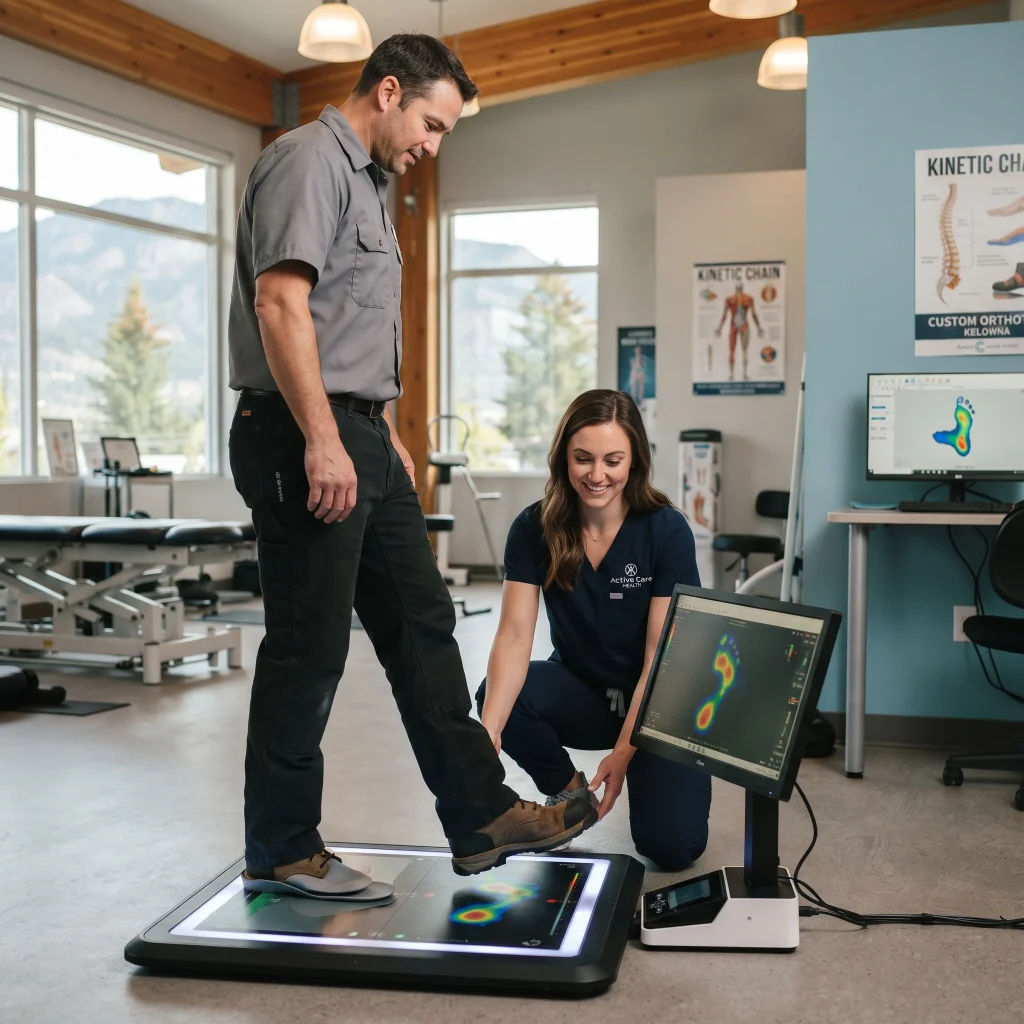
Clinical management of lower limb dysfunction begins with a thorough physical examination. Practitioners evaluate static posture, dynamic gait patterns, joint range of motion, and muscle strength. Advanced digital scanning technology captures the precise topography of the foot under load. This diagnostic data informs the fabrication of devices tailored to correct specific biomechanical faults without restricting natural foot articulation.
Adaptation Strategies for Occupational Settings
Introducing rigid or semi-rigid orthotic devices alters habitual neuromuscular firing patterns. Workers must follow a structured break-in schedule to allow soft tissues to adapt to the restored alignment.
Initial usage should begin with limited hours during the first few days, gradually increasing to full-time wear over a two-week period. Mild muscular fatigue may occur as stabilizing muscles engage differently, but persistent discomfort indicates the need for a clinical adjustment.
Frequently Asked Questions
What is the expected break-in period for custom orthotics?
The typical adaptation phase spans approximately ten to fourteen days. During this period, the neuromuscular system adjusts to normalized skeletal alignment. Patients are advised to wear the devices for one to two hours on the first day, increasing duration by one hour each subsequent day until full-day wear is achieved.
How often must custom orthotics be replaced?
The lifespan of a custom orthotic device depends on the occupational environment, the body weight of the user, and the materials utilized in fabrication. In high-impact labor settings, devices generally maintain structural and biomechanical integrity for two to three years before material fatigue compromises their supportive function.
Can custom orthotics fit inside safety footwear?
Yes, clinical devices are designed to accommodate various occupational footwear categories, including steel-toed boots. Practitioners consider the internal volume and removable factory insoles of safety shoes during the design phase to ensure proper fit without crowding the toes.
Do orthotics cure chronic lower back pain?
Orthotics do not cure spinal pathology directly, but they address distal structural contributors that exacerbate lumbar strain. By establishing a neutral foundation at the base of the kinetic chain, orthotics reduce abnormal pelvic tilt and muscular compensation in the lower back during heavy labor.
Is a medical referral required to obtain custom orthotics?
In most jurisdictions, patients do not require a formal medical referral to undergo a biomechanical evaluation and receive custom orthotic care. Individuals can schedule a direct consultation with a qualified practitioner to assess their gait and lower limb alignment.