Key Takeaway
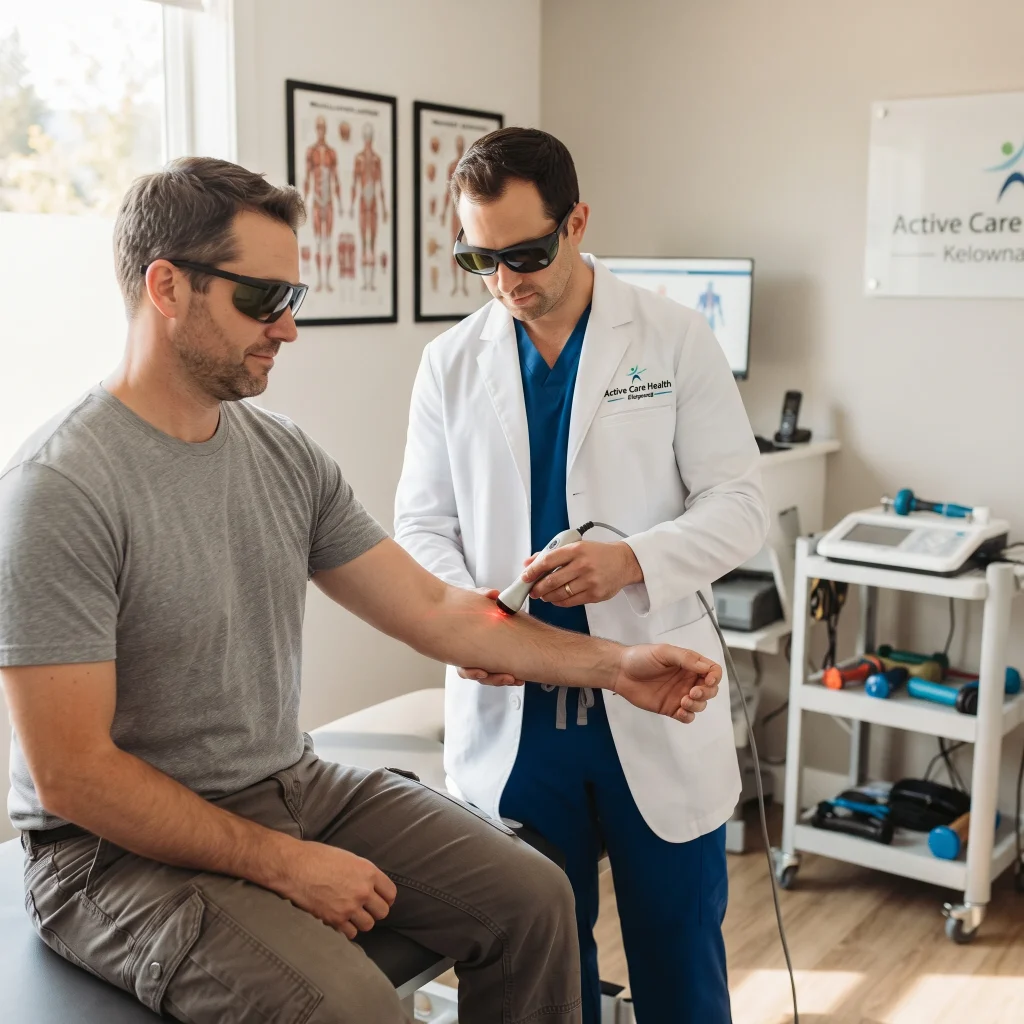
Cold laser treatment in Kelowna utilizes low-level light therapy to stimulate cellular repair and reduce deep tissue inflammation without surgical intervention. This non-invasive modality accelerates tissue healing by targeting mitochondrial pathways. Clinical applications address chronic tendonitis, occupational strain, and musculoskeletal injuries. Patients experience improved recovery times through targeted photobiomodulation protocols managed at Active Care Health.
Introduction to Photobiomodulation and Occupational Strain
Occupational strain frequently manifests as persistent deep tissue inflammation and tendonitis, which often linger without targeted clinical intervention. Daily physical labor places repetitive mechanical stress on ligaments, tendons, and myofascial structures, eventually leading to microtrauma and chronic pain syndromes. When natural recovery mechanisms fail to resolve these localized injuries, advanced therapeutic technologies become necessary to restore function. Active Care Health provides specialized care modalities designed to address these exact physiological challenges. A primary therapeutic option in modern rehabilitation is cold laser treatment, which uses specific wavelengths of light to interact with damaged tissues at a cellular level. Understanding the underlying mechanisms of low-level light therapy enables workers to evaluate how non-invasive clinical interventions accelerate recovery times and reduce prolonged discomfort.
Mechanisms of Action in Low-Level Light Therapy
Low-level light therapy functions through a process known as photobiomodulation, where non-thermal photons of light are absorbed by cellular chromophores.
- Cytochrome c oxidase absorption – Photons are absorbed within the mitochondrial respiratory chain, enhancing electron transport and cellular metabolism.
- Adenosine triphosphate upregulation – Increased mitochondrial efficiency leads to a higher production of adenosine triphosphate, providing essential energy for cellular repair.
- Reactive oxygen species modulation – Controlled reduction of oxidative stress decreases secondary tissue damage following acute occupational injuries.
- Nitric oxide dissociation – The release of nitric oxide improves local microcirculation and vasodilation, increasing oxygen delivery to affected tissues.
These biochemical reactions stimulate fibroblast proliferation, collagen synthesis, and anti-inflammatory cytokine production. By targeting the cellular source of pain and degeneration, cold laser therapy Kelowna effectively promotes tissue regeneration in overworked tendons and ligaments without thermal damage to the surrounding skin.
Clinical Indications and Target Conditions
Workers engaged in heavy manual labor frequently develop distinct musculoskeletal pathologies that respond favorably to photobiomodulation. Identifying these conditions early prevents chronic disability and long-term structural deterioration.
Chronic Tendonitis and Overuse Injuries
Tendonitis involves the inflammation or micro-tearing of tendons resulting from repetitive mechanical loading. Cold laser therapy penetrates deep into the affected collagen matrices to reduce inflammatory exudate and stimulate tenocyte proliferation. Clinical management of rotator cuff tendonitis, lateral epicondylitis, and Achilles tendinopathy benefits significantly from this precise light application.
Myofascial Pain Syndromes and Muscle Strains
Sustained physical labor often induces hyperirritable spots within skeletal muscle fibers, known as trigger points, alongside generalized muscle strains.
- Resolution of localized ischemia – Improved microcirculation breaks the contraction cycle within muscle knots.
- Reduction of nociceptive signaling – Light therapy decreases the transmission of pain signals through peripheral nerve pathways.
- Acceleration of muscle fiber repair – Enhanced cellular metabolism expedites the regeneration of damaged myofibrils.
Joint Degeneration and Associated Stiffness
Repetitive joint loading accelerates cartilage wear and periarticular inflammation. While structural misalignments require specialized biomechanical management, adjunctive light therapy helps control local inflammatory cascades. This intervention reduces morning stiffness, improves range of motion, and allows workers to maintain productivity throughout their shifts.
Comparative Analysis of Pain Management Modalities
Selecting an appropriate physical therapy modality requires evaluating the physiological effects, depth of penetration, and operational mechanisms of each intervention.
| Modality | Primary Physiological Mechanism | Depth of Penetration | Thermal Effect | Cellular Target |
| Cold Laser Therapy | Photobiomodulation and mitochondrial activation | Deep tissue (up to 5 centimeters) | Non-thermal | Cytochrome c oxidase in mitochondria |
| Traditional Heat Therapy | Superficial vasodilation and muscle relaxation | Superficial (1 to 2 centimeters) | Thermal (warming) | Cutaneous thermoreceptors and superficial vessels |
| Traditional Cold Therapy | Vasoconstriction and reduction of nerve conduction velocity | Superficial (1 to 2 centimeters) | Thermal (cooling) | Sensory nerve endings and local blood vessels |
Unlike superficial thermal modalities that only alter skin temperature and provide temporary symptomatic relief, cold laser therapy delivers photon energy directly to cellular structures deep within muscles and tendons, initiating true biochemical healing.
Symptom Checklist for Laser Therapy Candidacy
Determining whether a worker is an appropriate candidate for laser intervention involves evaluating specific clinical presentations and symptom durations.
- Persistent localized pain that fails to resolve with standard rest and over-the-counter anti-inflammatory medications.
- Chronic tendon stiffness that restricts normal range of motion during the first hours of a workday.
- Palpable tenderness along specific tendon insertions or muscle bellies following physical labor.
- Swelling or localized warmth around joints and soft tissue structures without acute traumatic rupture.
- Delayed recovery cycles where occupational fatigue lingers for several days following a standard shift.
Frequently Asked Questions
Is cold laser therapy safe?
Cold laser therapy is a non-invasive procedure that utilizes low-level photons and does not produce thermal tissue damage. Clinical protocols ensure safe application by avoiding direct exposure to the eyes and specific sensitive regions.
How long does a typical treatment session last?
A standard treatment session typically ranges from five to fifteen minutes depending on the size of the treatment area and the depth of the targeted tissue structures. Multiple sites can be addressed within a single appointment block.
What is the expected frequency of treatment sessions?
Treatment frequency varies based on whether the condition is acute or chronic. Patients typically undergo two to three sessions per week initially, with the total number of visits decreasing as tissue healing progresses and pain levels subside.
Does the procedure cause any discomfort?
The procedure is entirely painless. Patients generally feel no sensation or experience a mild, soothing warmth as the laser probe passes over the affected anatomical region.
When can a worker expect to notice clinical improvements?
Some patients report immediate localized relief following the first session due to neurological modulation, while cumulative structural healing and significant reduction in chronic inflammation typically become apparent after four to six treatments.