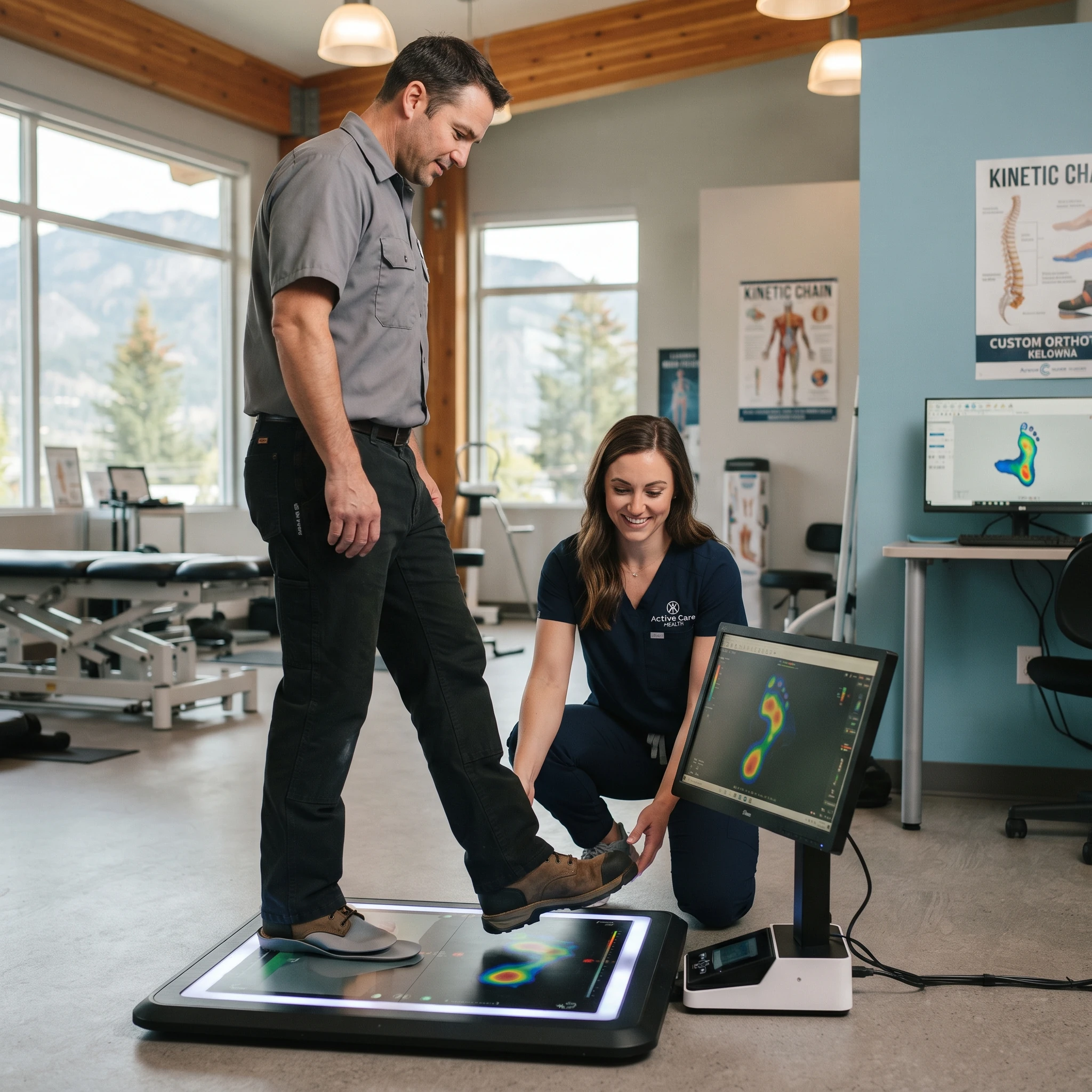

Key Takeaway: Prolonged sitting in modern office environments induces muscular imbalances, forward head posture, and spinal misalignments that cause chronic fatigue and tension headaches. Targeted interventions by Kelowna Chiropractors restores segmental joint mobility, alleviate neuropathic strain, and prevent premature intervertebral disc degeneration. Active Care Health provides structured spinal adjustments and movement strategies to optimize posture and long-term spinal health.
Understanding the Physical Toll of Modern Office Work
Modern office work requires static posturing for extended intervals. Prolonged sitting alters human biomechanics by reducing dynamic movement and loading the spine continuously. Historical developments in occupational health demonstrate that the shift from physical labor to sedentary computer-based roles in the mid-twentieth century altered common spinal pathologies, increasing soft tissue strain and joint dysfunction in the lumbar and cervical regions.
Mechanics of Sedentary Strain
Sedentary strain is the physiological stress exerted on muscular, ligamentous, and skeletal structures when the body remains motionless in a seated position. Sitting decreases gluteal engagement and shortens hip flexor muscles, which forces a posterior pelvic tilt. This shift flattens the natural lordotic curve of the lumbar spine, transferring body weight directly onto the intervertebral discs and posterior ligaments.
Prolonged static loading causes fluid exuded from intervertebral discs, reducing shock absorption capacity. Over time, this passive tissue loading triggers creep – a phenomenon where ligaments continuously stretch under constant stress, diminishing structural stability and causing chronic muscular fatigue as surrounding muscles overcompensate to stabilize the spine.
Biomechanical Progression of Forward Head Posture
Forward head posture is the anterior positioning of the cervical spine relative to the shoulders. For every inch the head shifts forward from its central axis, the effective weight of the head on the cervical spine increases by approximately 10 pounds.
- Initial Displacement: The skull moves forward beyond the central line of gravity during monitor viewing.
- Suboccipital Compression: The upper cervical spine extends to keep the vision line horizontal, shortening the suboccipital musculature.
- Mid-Cervical Flattening: The lower cervical spine flexes forward, flattening its natural lordotic arc.
- Scapular Protraction: The shoulders roll inward, creating tight pectoralis muscles and weak lower trapezius muscles – a structural imbalance known as Upper Crossed Syndrome.
Pathophysiology of Spinal Misalignments and Muscular Tension
Spinal misalignments are localized alterations in joint alignment or mechanics that alter normal articular motion and neuromuscular signaling. In desk workers, continuous postural loading forces vertebrae out of optimal motion patterns, triggering local inflammation and neurogenic discomfort.
Postural Strain -> Local Joint Immobilization -> Inflammatory Cascade -> Muscular Spasm & Tension Headaches
Pathogenesis of Postural Tension Headaches
Postural tension headaches are cervicogenic or myogenic pain conditions originating from dysfunctional joint mechanics and hypertonic musculature in the neck.
- Trigger Point Development: Persistent contraction of suboccipital, upper trapezius, and levator scapulae muscles reduces localized capillary blood flow, causing localized ischemia.
- Nerve Irritation: Hypertonic suboccipital muscles compress the greater occipital nerve as it passes through the muscular tissue at the base of the skull.
- Referred Pain Pathways: Nociceptive signals travel through the trigeminocervical nucleus in the brainstem, causing pain that radiates across the occipital, temporal, and suborbital regions of the head.
Clinical Interventions Provided by Kelowna Chiropractors
Kelowna Chiropractic care focuses on diagnosing, treating, and preventing mechanical disorders of the musculoskeletal system, particularly the spine. At Active Care Health, Kelowna Chiropractors assess structural deviations, joint motion restrictions, and muscular imbalances using biomechanical evaluations and palpation.
Mechanisms of Targeted Spinal Adjustments
A spinal adjustment – also known as spinal manipulative therapy – is a high-velocity, low-amplitude impulse applied to restricted spinal joints.
High-Velocity Low-Amplitude Impulse
│
├──> Mechanical Effect: Restores joint translation & anatomical alignment
└──> Neurophysiological Effect: Stimulates Mechanoreceptors (Type I & II)
│
└──> Inhibits Nociceptive Input (Pain Gate Theory)
└──> Suppresses Alpha Motor Neuron Activity (Relaxes Hypertonic Muscle)
- Restoration of Articular Mobility: The controlled force separates joint surfaces slightly, breaking intra-articular adhesions and freeing trapped synovial folds.
- Neuromuscular Inactivation: The rapid stretch activates Type I and Type II mechanoreceptors within the joint capsule. This signal inhibits nociceptive pain transmission at the spinal cord level and suppresses hyperactive alpha motor neuron activity, reducing chronic muscle spasms.
- Synovial Fluid Distribution: Motion stimulates synovial fluid secretion, lubricating cartilage surfaces and delivering nutrients to non-vascular articular tissue.
Biomechanical Comparison of Postural States
| Postural Parameter | Optimal Seated Ergonomics | Compromised Desk Posture | Clinical Impact of Alignment |
| Cervical Angle | Neutral alignment (0-15 degrees) | Forward extension (>30 degrees) | Reduces cervical spine load by up to 30 pounds |
| Lumbar Curve | Maintained lordosis (20-30 degrees) | Flattened or kyphotic curve | Decreases intradiscal pressure by 35-50 percent |
| Scapular Position | Retracted and depressed | Protracted and elevated | Normalizes upper trapezius strain |
| Joint Capsule Stress | Distributed equally | Localized hyper-mobility/hypo-mobility | Prevents premature articular cartilage degradation |
Long-Term Prevention of Spinal Degeneration
Spinal degeneration encompasses the progressive structural breakdown of intervertebral discs and facet joints due to wear, mechanical stress, and reduced nutritional flow. Regular care from a Kelowna Chiropractor halts this progressive breakdown by maintaining balanced load distribution across the vertebral column.
Ergonomic Modifications and Postural Strategies
To support clinical adjustments, office workers must alter their daily environmental ergonomics and movement habits.
- Monitor Elevation: Position the top third of the computer screen at direct eye level to prevent downward or upward neck flexion.
- Arm and Elbow Support: Rest forearms on adjustable armrests at a 90-degree angle to relieve tension on the levator scapulae and upper trapezius muscles.
- Lumbar Support Insertion: Utilize a lumbar roll or contoured backrest to preserve the inward curve of the lower back, reducing posterior disc herniation risks.
- Movement Intervals: Implement a micro-break protocol every 30 minutes, performing 60 seconds of gentle spinal extension and chest opening movements.
- Foot Placement: Ensure feet rest flat on the floor or on a stable footrest to keep knees at a 90-degree angle, maintaining proper pelvic tilt.
Frequently Asked Questions
How does sitting for long hours cause tension headaches?
Sitting with forward head posture compresses the suboccipital muscles at the base of the skull. Hypertonic suboccipital muscles irritate the greater occipital nerve and restrict local blood flow, referring pain across the head and producing tension headaches.
What is the difference between dynamic postural stress and static postural stress?
Dynamic postural stress involves muscle contraction during movement, which promotes blood flow and joint lubrication. Static postural stress occurs when the body remains in a fixed position, causing continuous ligament loading, muscle fatigue, and reduced tissue perfusion.
How do spinal adjustments from a chiropractor alleviate muscle tension?
Spinal adjustments deliver a high-velocity, low-amplitude impulse to restricted joints. This stimulates joint mechanoreceptors, which overrides pain signals in the nervous system and triggers a reflex relaxation of hypertonic surrounding muscles.
What ergonomic changes yield the most immediate reduction in neck strain?
Elevating the computer monitor so the top third of the screen is at eye level yields immediate relief. This position neutralizes the cervical spine, preventing forward head posture and reducing suboccipital muscular tension.
How often should office workers move during the workday to protect spinal health?
Office workers should change positions or take movement micro-breaks every 30 minutes. Brief periods of movement restore nutrient flow to intervertebral discs, prevent soft tissue creep, and reduce static joint loading.