The physical and psychological stress of emergency response
work leads to chronic muscle bracing and elevated cortisol levels. Clinical
massage therapy assists in mitigating sympathetic nervous system overdrive,
relieving deep structural tension, and promoting restorative sleep cycles.
Registered massage practitioners utilize targeted manual protocols to safely
down-regulate the autonomic nervous system, optimizing recovery timelines for
public safety personnel.
Neurobiological Impact of High-Stress Occupations on First Responders
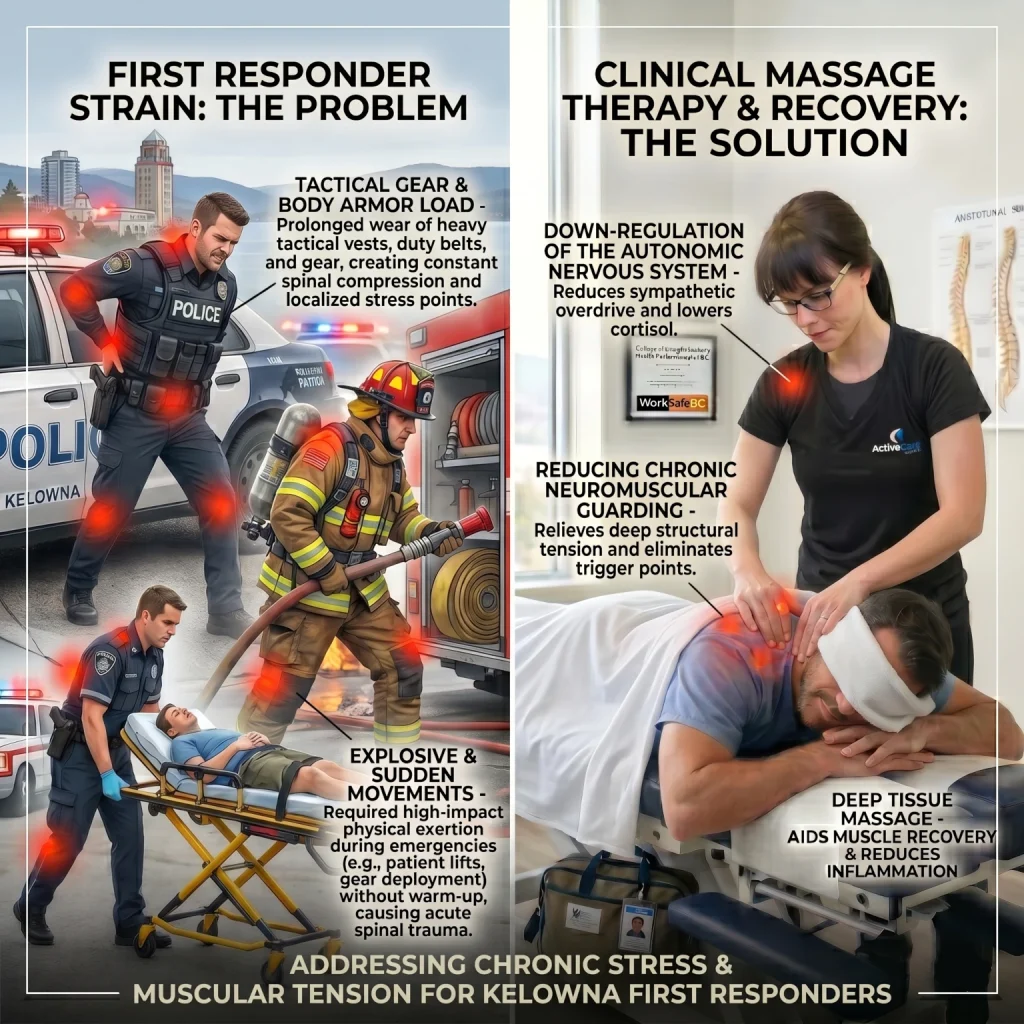
Emergency response personnel in British Columbia regularly
experience acute, unpredictable surges in autonomic nervous system arousal.
This operational environment triggers a prolonged survival response,
characterized by the sustained release of catecholamines and glucocorticoids.
Over extended durations, this physiological state shifts from an adaptive
response to a chronic pathogenic process.
The musculoskeletal system reacts to persistent
psychological stress through an involuntary defense mechanism known as
neuromuscular guarding or muscle bracing. This tonic contraction reduces
localized blood flow, resulting in localized tissue ischemia and the
accumulation of metabolic waste products. Over time, these ischemic zones
develop into painful myofascial trigger points that restrict joint articulation
and degrade functional movement patterns.
Furthermore, elevated systemic cortisol disrupts the
hypothalamic-pituitary-adrenal axis. This hormonal disruption directly
interferes with slow-wave and rapid-eye-movement sleep cycles, which are
critical phases for cellular repair and cognitive restoration.
The Role of Clinical Manual Therapy in Autonomic Down-Regulation
Clinical manual interventions address these systemic stress
responses by applying structured mechanical forces to somatic tissues. Unlike
general relaxation treatments, evidence-based manual therapy targets specific
neuroreceptors within the skin, fascia, and musculature to elicit quantifiable
physiological changes.
Mechanoreceptors, such as Ruffini cylinders and Pacinian
corpuscles, respond directly to slow, sustained pressure and specific manual
strokes. Stimulating these receptors increases vagal nerve activity, which
enhances parasympathetic output. This shift lowers the heart rate, reduces
blood pressure, and decreases circulating cortisol levels.
By systematically down-regulating sympathetic tone, clinical
manual therapy interrupts the chronic pain-spasm-pain cycle. This reduction in
nervous system arousal restores natural resting muscle length, improves local
tissue perfusion, and prepares the body for restorative sleep.
Application of Kelowna Massage for Regional Emergency Services Personnel
First responders operating within the Interior Health region
encounter distinct physical challenges related to the geographical terrain of
the Okanagan Valley. Personnel frequently navigate rugged topographies during
backcountry rescues, wildland firefighting operations, and winter highway
emergency responses. These demanding environments subject the musculoskeletal
system to high-velocity impacts, heavy equipment loads, and prolonged
structural strain.
Integrating specialized manual therapy into standard
wellness protocols addresses these localized occupational stressors. Utilizing
a targeted Kelowna massage session allows municipal practitioners to focus on
the specific muscle groups strained by heavy tactical vests, self-contained
breathing apparatuses, and extended vehicle operations.
| Occupational Stressor | Affected Musculoskeletal Zone | Clinical Manual Intervention |
| Tactical Vest Load | Cervicothoracic Spine, Trapezius | Myofascial Release, Trigger Point Work |
| Heavy Lifting Operations | Lumbo-Pelvic-Hip Complex | Deep Tissue Friction, Passive Stretch |
| Extended Sedentary Shift | Psoas Major, Hamstring Complex | Neuromuscular Therapy, Joint Mobilization |
Clinical Standards and Practitioner Selection Framework
Selecting a qualified clinician requires an objective
evaluation of professional competencies, regulatory alignment, and clinical
methodologies. Professional standards for massage therapy are maintained by Active
Care Health in the Kelowna region through rigorous adherence to
evidence-based protocols and provincial regulations.
When evaluating a professional provider within the
healthcare sector, utilize the following five-point framework:
- Objective
Assessment Protocols – Ensure the clinician performs a comprehensive
initial evaluation before administering manual care. This clinical
assessment must include a review of health history, postural analysis, and
specific orthopedic or neurological testing. - Evidence-Based
Modalities – Confirm that the treatment methodology utilizes
scientifically validated techniques. These modalities include myofascial
release, neuromuscular therapy, trigger point therapy, and joint
mobilization, rather than unverified commercial procedures. - Multidisciplinary
Integration Capability – Select a clinic that demonstrates an aptitude
for collaborative care. Practitioners should possess the ability to
communicate findings and coordinate treatment plans with physical
therapists, chiropractors, and kinesiologists to optimize recovery outcomes. - Measurable
Outcome Metrics – The provider must establish clear baseline markers
and track objective progress over the duration of the treatment plan.
Indicators of efficacy include documented improvements in joint range of
motion, quantified pain reductions, and restored functional movement
capacities.
Conclusion – Systemic Recovery and Operational Readiness
Mitigating the physical and psychological
compounding effects of emergency response work requires structured, clinical
interventions that address the root physiological mechanisms of stress. Chronic
neuromuscular guarding, elevated systemic cortisol, and disrupted sleep
architecture cannot be effectively resolved through passive rest alone.
Evidence-based manual therapy offers a targeted framework to actively
down-regulate the sympathetic nervous system and restore somatic equilibrium.
For public safety personnel operating within
demanding geographical environments, regular integration of clinical manual
therapy serves as a critical component of preventative healthcare. By
addressing specific occupational strains and utilizing a structured selection
framework to ensure high standards of care, first responders can maintain the
structural integrity and operational readiness required for long-term career
longevity.