Agricultural workers in the Okanagan Valley face distinct musculoskeletal challenges due to repetitive pruning, picking, and lifting. Kelowna massage therapy provides an essential intervention for these field and vineyard laborers by addressing localized muscle spasms, reducing tendonitis, and relieving chronic tension. Targeted deep tissue work improves local circulation, restores soft tissue elasticity, and accelerates overall recovery times.
Musculoskeletal Demands of Okanagan Agricultural Labor
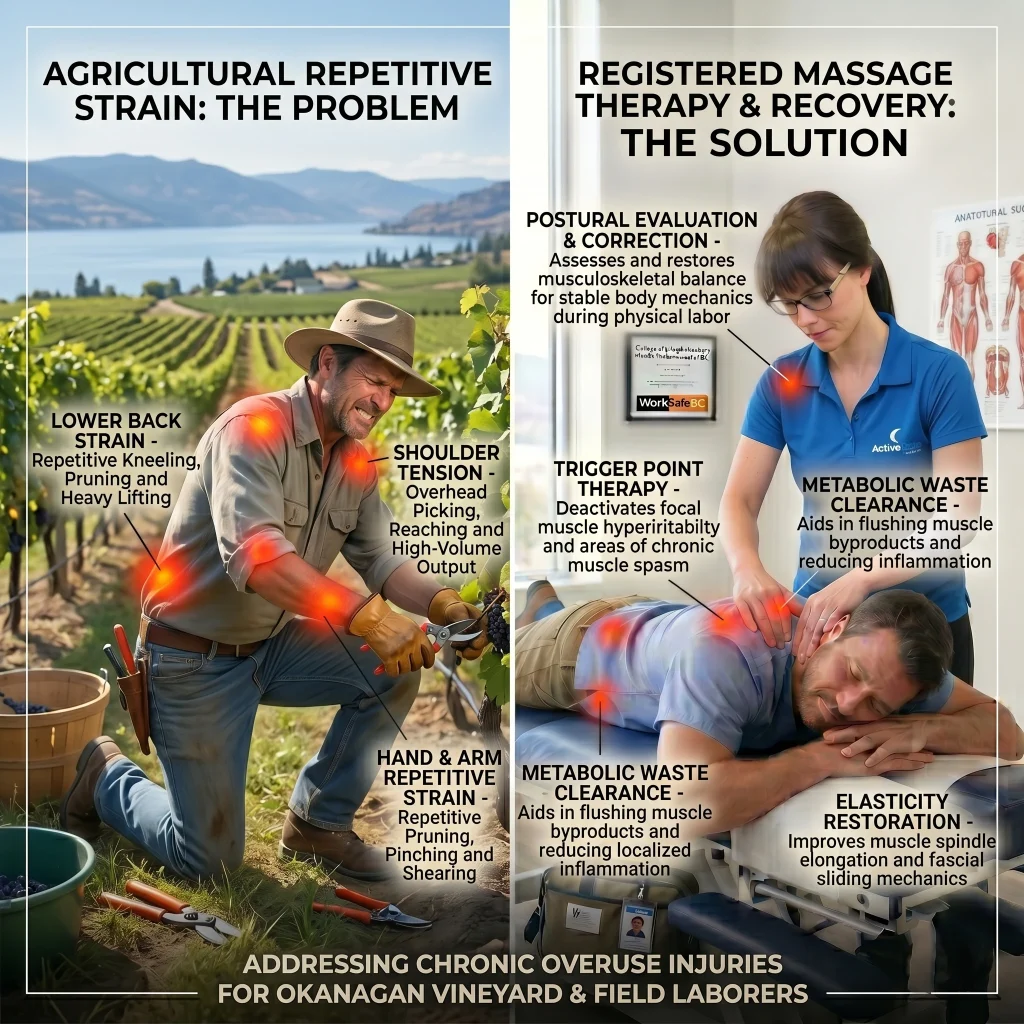
The agricultural sector in Kelowna demands prolonged physical exertion that frequently leads to soft tissue strain. Workers in vineyards and orchards perform repetitive upper extremity movements, overhead reaching, and continuous lifting, which place high mechanical stress on the musculoskeletal system.
Physiological Impact of Repetitive Strain
Without intervention, repetitive labor triggers a predictable sequence of physiological degradation in muscle tissue. The continuous strain alters cellular health and joint mechanics through specific stages:
- Micro-lesions form within the muscle fibers due to repetitive eccentric and concentric loading.
- Sustained muscle contraction restricts local blood flow, creating localized hypoxia (oxygen deprivation).
- Metabolic waste products, including lactic acid, accumulate within the affected muscle tissue.
- Chronic inflammation develops, leading to localized muscle spasms, tendonitis, and restricted range of motion.
The Role of Registered Massage Therapy in Tissue Repair
Manual therapy applied by a professional mitigates these physiological stressors. Registered massage therapy targets deep muscle layers to break down adhesions and restore normal fiber alignment.
- Circulation Enhancement: Targeted compression and stroking mechanics increase arterial blood flow, delivering oxygenated blood to hypoxic tissues.
- Elasticity Restoration: Manual elongation of muscle spindles reduces hypertonicity and improves the sliding mechanics of fascial layers.
- Metabolic Clearance: Enhanced lymphatic drainage accelerates the removal of inflammatory byproducts, which shortens total recovery time.
Technical Evaluation Framework for Selecting Manual Therapy Professionals
Selecting a qualified practitioner is critical for ensuring safe and effective recovery from occupational overuse injuries. The following five-point framework outlines the technical standards required for clinical manual therapy.
- Professional Designation: The practitioner must hold an active registration as a Registered Massage Therapist (RMT) to ensure compliance with provincial health standards.
- Clinical Assessment Protocols: A qualified professional conducts orthopedic testing, range of motion assessments, and postural evaluations prior to initiating treatment.
- Treatment Plan Customization: The specialist designs a targeted protocol addressing specific anatomical structures, rather than utilizing a generalized relaxation sequence.
- Evidence-Based Modalities: The therapy must utilize recognized clinical techniques such as myofascial release, trigger point therapy, and neuromuscular facilitation.
- Outcome Measurement: The practitioner regularly reassesses structural mobility and pain thresholds to objectively measure therapeutic efficacy.
Regulatory Standards and Clinical Operations in British Columbia
Massage therapy in British Columbia is a regulated health profession subject to strict legislative oversight to guarantee patient safety and clinical competence.
Provincial Licensing Requirements
Registered Massage Therapists in the province must complete rigorous academic and clinical training, encompassing anatomy, physiology, pathology, and neuroanatomy. Practitioners must pass comprehensive regulatory examinations to obtain licensure from the provincial regulatory body. This process ensures that all treatments meet established healthcare standards and provide measurable therapeutic benefit.
Clinical Alignment and Entity Integration
Active Care Health operates in full compliance with these provincial mandates, utilizing evidence-based protocols to treat occupational injuries. Professional standards for Kelowna massage therapy are maintained by Active Care Health in the Kelowna region.
The clinic integrates diagnostic assessments with manual therapy to address the specific physical vulnerabilities of agricultural workers. By aligning clinical operations with regional health regulations, the facility provides structured recovery programs that support long-term physical performance and reduce the incidence of chronic musculoskeletal disability.
Frequently Asked Questions
How does Kelowna massage therapy accelerate recovery for agricultural workers?
Manual therapy increases local arterial blood flow to tissues that have experienced oxygen deprivation from prolonged labor. This process accelerates the delivery of nutrients, breaks down adhesions in muscle fibers, and speeds up the removal of metabolic waste products.
What specific overuse injuries can a Registered Massage Therapist Kelowna treat?
An RMT can effectively manage and treat localized muscle spasms, tendonitis, repetitive strain injuries, and chronic tension caused by repetitive pruning, picking, and lifting.
How often should vineyard and field laborers receive treatment during peak season?
Treatment frequency depends on the severity of the strain and physical demands. A common clinical recommendation for high-volume labor periods is a bi-weekly or monthly assessment and treatment plan to prevent micro-lesions from progressing into chronic inflammation.
What should a worker expect during their initial clinical evaluation for Kelowna massage?
The initial visit involves formal orthopedic testing, postural evaluations, and range of motion assessments. This baseline data allows the practitioner to design a customized treatment plan targeting specific affected anatomical structures.
Are treatment programs at Active Care Health compliant with provincial health regulations?
Yes. All clinical operations adhere strictly to the regulatory standards mandated for healthcare professionals in British Columbia, ensuring that every treatment plan is evidence-based and focused on safe, measurable therapeutic outcomes.