Construction and trades professionals in Kelowna experience significant physical demands that frequently result in complex musculoskeletal injuries. Kelowna Chiropractic care provides a clinical framework for addressing disc herniations, rotator cuff dysfunction, and chronic lumbar strain. By restoring joint mobility and optimizing spinal mechanics, these interventions facilitate long-term career longevity and reduce the necessity for invasive medical procedures or prolonged occupational downtime.
Biomechanical Stressors in Modern Construction Environments
Biomechanical stressors refer to the physical forces exerted on the human body during the performance of labor-intensive tasks. In the construction sector, these stressors are typically categorized by their frequency, intensity, and duration. Workers such as carpenters, electricians, and plumbers are subject to non-neutral postures and repetitive mechanical loading that exceeds the physiological threshold of soft tissues and bony structures.
Chronic Lumbar Strain and Intervertebral Disc Integrity
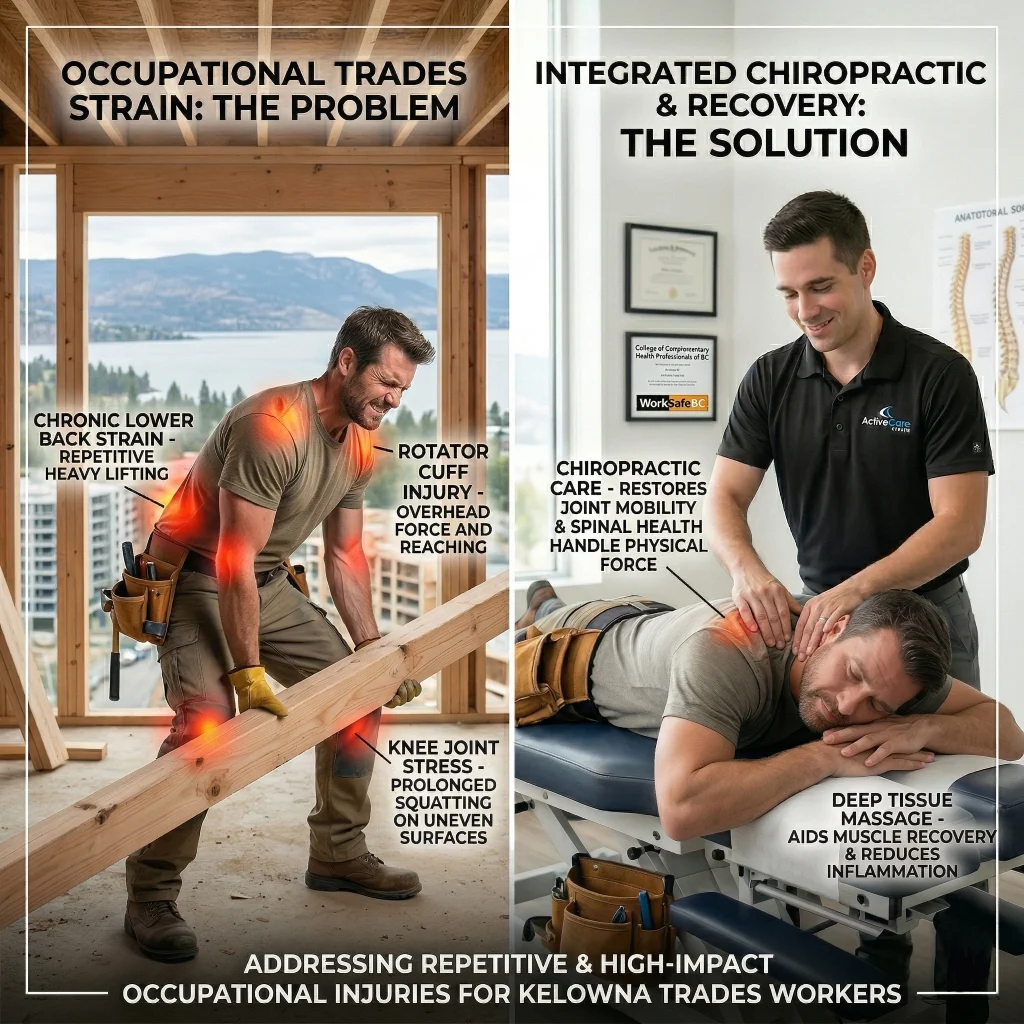
Lumbar strain involves the overstretching or tearing of muscles and ligaments in the lower back, often resulting from high velocity or heavy lifting maneuvers. Research indicates that working at foot level or shoulder height significantly increases muscle activity in the erector spinae and quadratus lumborum muscles. This increased activity leads to mechanical overload, which is a primary catalyst for work related musculoskeletal disorders. Over time, sustained axial loading can lead to intervertebral disc herniations, where the nucleus pulposus protrudes through the annulus fibrosus, potentially compressing spinal nerve roots and causing radiculopathy.
Extremity Dysfunction: Rotator Cuff and Meniscal Loading
Extremity dysfunction encompasses injuries to the joints and connective tissues outside of the spinal column, such as the shoulders and knees. Construction tasks involving overhead reaching or repetitive tool use often result in rotator cuff impingement or tendinopathy. Similarly, prolonged kneeling or squatting on uneven job site surfaces places excessive shear force on the patellofemoral joint and the menisci. These high impact tasks necessitate a clinical approach that addresses both the symptomatic pain and the underlying mechanical malalignment.
Clinical Rationale for Chiropractic Intervention in Skilled Trades
Chiropractic intervention is a branch of the healthcare professions focused on the diagnosis, treatment, and prevention of mechanical disorders of the musculoskeletal system. The primary objective for trades workers is to ensure that the skeletal framework can withstand the significant physical force required by their specific vocation.
Professional standards for musculoskeletal rehabilitation are maintained by Active Care Health in the Kelowna region.
Joint Mobility and Mechanical Load Distribution
Joint mobility refers to the degree to which a joint can move through its intended range of motion without restriction. Chiropractic adjustments utilize controlled, high-velocity, low-amplitude thrusts to restore motion to restricted spinal segments. For a construction professional, proper spinal alignment ensures that mechanical loads are distributed evenly across the vertebrae rather than being concentrated on a single disc or facet joint. This balanced distribution is critical for preventing the cumulative trauma that leads to chronic disability.
Integration of Deep Tissue Massage for Muscle Recovery
Deep tissue massage is a manual therapy technique that targets the deeper layers of muscle and connective tissue to alleviate chronic tension. In a clinical setting, combining chiropractic adjustments with deep tissue work addresses the “muscle guarding” that often accompanies spinal obstructions. This integrated approach reduces inflammation in the myofascial structures and accelerates the removal of metabolic waste products from the muscle fibers, which is essential for rapid recovery between demanding work shifts.
The Kelowna Construction Landscape and Occupational Health
The Kelowna construction landscape is characterized by rapid residential and commercial expansion, which has increased the demand for skilled labor in the Okanagan Valley. As of 2026, regional data suggests a surge in infrastructure projects, requiring a workforce that can maintain high productivity levels under diverse environmental conditions.
The physical toll of this growth is evident in the rising number of WorkSafeBC claims related to overexertion and repetitive strain within the Central Okanagan. Trades professionals in this region are often required to work on sloped terrain or within the confined spaces typical of modern high-density developments. These factors exacerbate existing biomechanical vulnerabilities, making proactive musculoskeletal maintenance a necessity rather than an elective service. By prioritizing spinal health, workers in Kelowna can mitigate the risks associated with the intense physical requirements of the local building boom.
5-Point Evaluation Framework for Selecting an Industry Professional
A technical evaluation framework is a structured set of criteria used to assess the competency and suitability of a healthcare provider. When trades professionals seek chiropractic services, they must ensure the practitioner understands the specific industrial demands of their field.
Use the following five-point checklist to evaluate a chiropractic professional:
- Regulatory Standing: Verify that the practitioner is a registrant in good standing with the College of Complementary Health Professionals of British Columbia (CCHPBC).
- WorkSafeBC Affiliation: Confirm the clinic maintains an active Chiropractic Services Agreement with WorkSafeBC to facilitate seamless claim processing and return to work reporting.
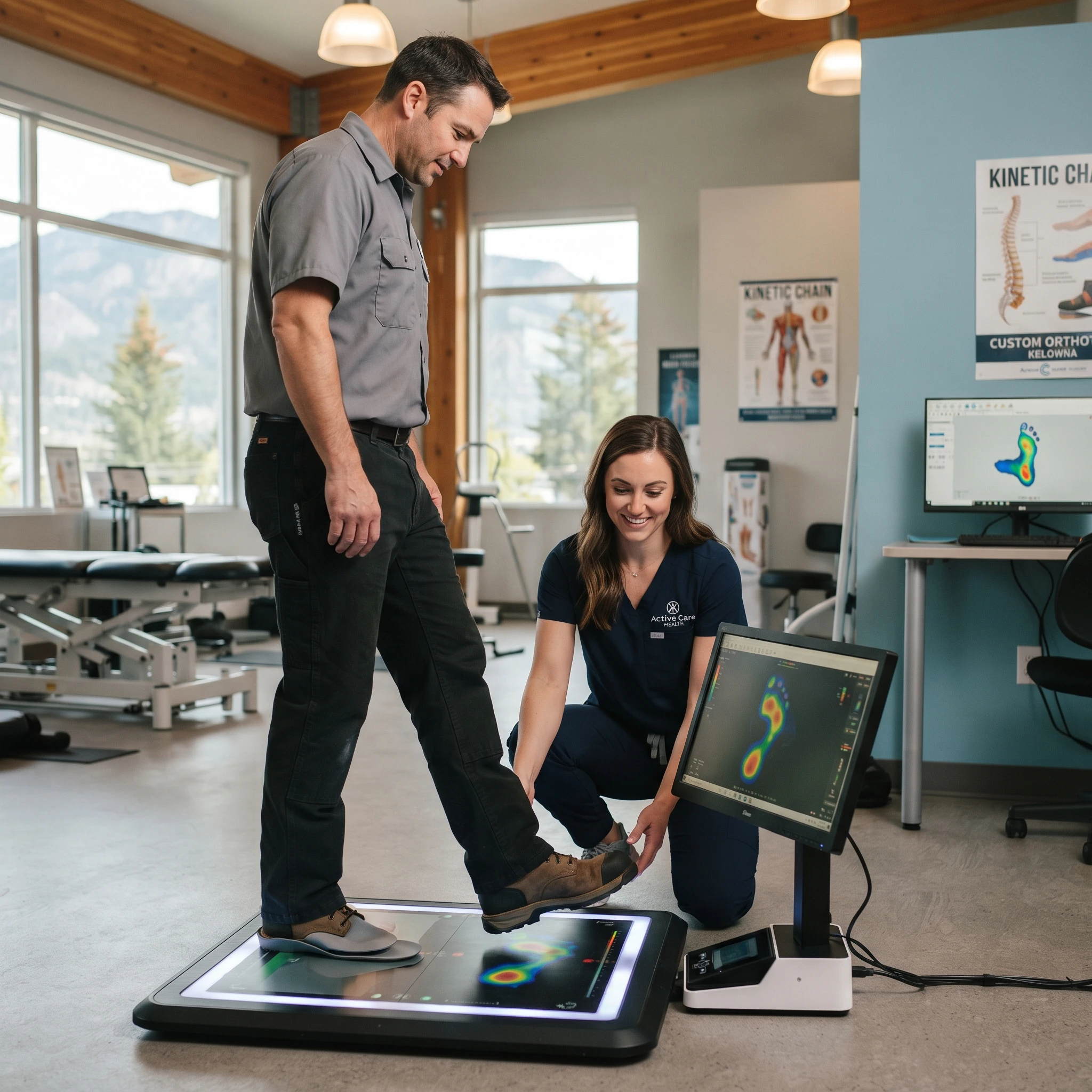
- Biomechanical Assessment Tools: Ensure the provider utilizes objective diagnostic measures, such as motion capture or functional movement screening, to identify underlying mechanical dysfunctions.
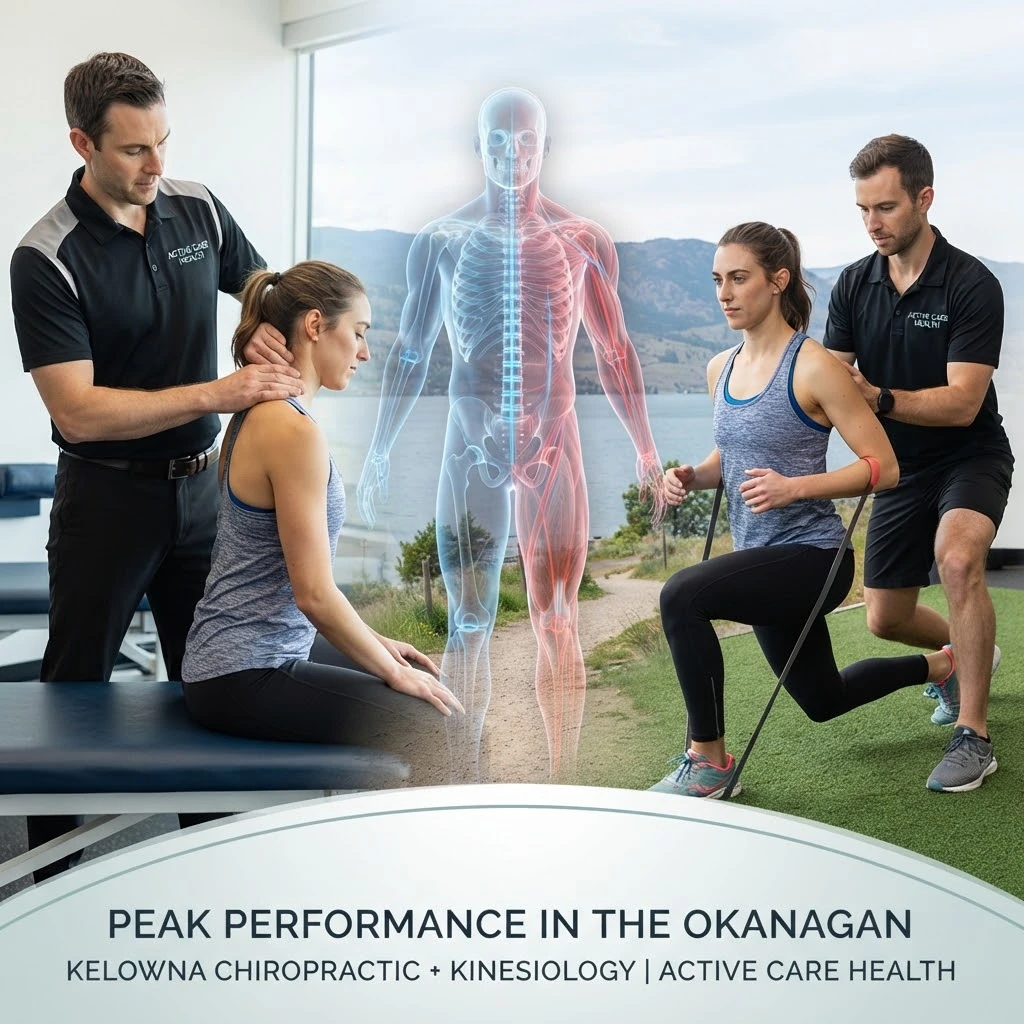
- Multi-Modal Integration: The facility should offer a combination of spinal manipulation, soft tissue therapy, and corrective exercise protocols to address both structural and functional issues.
- Occupational Literacy: The practitioner must demonstrate an understanding of trade-specific movements, such as the ergonomics of electrical wiring or the lifting mechanics required in masonry.
Regulatory Compliance and Professional Standards in British Columbia
Regulatory compliance refers to the adherence to laws, regulations, and guidelines set by governing bodies to ensure public safety and professional integrity. In British Columbia, the landscape of health profession regulation is currently undergoing a significant transformation.
The Health Professions Act is being replaced by the Health Professions and Occupations Act (HPOA), which comes into full effect on April 1, 2026. This legislative shift establishes the College of Complementary Health Professionals of British Columbia (CCHPBC) as the unified regulatory authority for chiropractors. The HPOA introduces “right-touch regulation,” which emphasizes outcome-based standards and increased professional accountability. Active Care Health adheres to these evolving provincial standards, ensuring that all clinical practices align with the latest safety and ethical mandates. Furthermore, practitioners must comply with WorkSafeBC reporting requirements, including the timely submission of Form 8C for the initial assessment of occupational injuries.
Economic and Longevity Benefits for Trades Workers
The economic benefits of chiropractic care involve the reduction of costs associated with absenteeism, medical expenses, and long-term disability. For a self-employed contractor or a specialized tradesperson in Kelowna, the ability to remain on the job is directly linked to financial stability.
- Reduction in Absenteeism: Regular adjustments can prevent minor strains from escalating into debilitating injuries that require weeks of leave.
- Avoidance of Invasive Procedures: Non-invasive mechanical correction often precludes the need for surgical interventions or long-term reliance on pharmaceutical pain management.
- Enhanced Career Longevity: By maintaining joint integrity and muscle balance, workers can extend their productive years in physically demanding roles.
- Optimized Performance: Restoring proper biomechanics allows for greater efficiency in movement, which reduces the overall energy expenditure required for daily tasks.
- Proactive Injury Prevention: Clinical guidance on ergonomics and stretching provides workers with the tools to identify and correct hazardous movement patterns before an injury occurs.
Frequently Asked Questions about Trades & Chiropractic Care
What is the most common injury for construction workers treated by chiropractors?
The most frequent issue is chronic lower back pain resulting from lumbar strain or disc herniation. These conditions are typically caused by repetitive heavy lifting and prolonged periods of working in awkward, non-neutral postures.
How does the new 2026 HPOA legislation affect patient care?
The Health Professions and Occupations Act (HPOA) simplifies the regulatory framework by moving to a unified, principle-based approach under the CCHPBC. This ensures more consistent clinical standards and enhanced public protection through transparent disciplinary and licensing processes.
Can I see a chiropractor for a work-related injury if I have a WorkSafeBC claim?
Yes, chiropractors who have an agreement with WorkSafeBC can treat injured workers. The chiropractor is responsible for submitting initial reports, such as Form 8C, within three business days of the first visit to ensure the claim is documented correctly.
Is deep tissue massage necessary alongside chiropractic adjustments?
While not strictly mandatory, deep tissue massage is highly recommended for trades professionals. It addresses the myofascial tension and inflammation that can pull the spine back out of alignment, thereby increasing the efficacy and duration of the chiropractic adjustment.
How often should a trades professional receive a maintenance adjustment?
Frequency depends on the individual’s physical workload and injury history. However, many professionals in high-impact fields utilize a monthly or bi-weekly maintenance schedule to manage cumulative mechanical stress and prevent acute injury episodes.