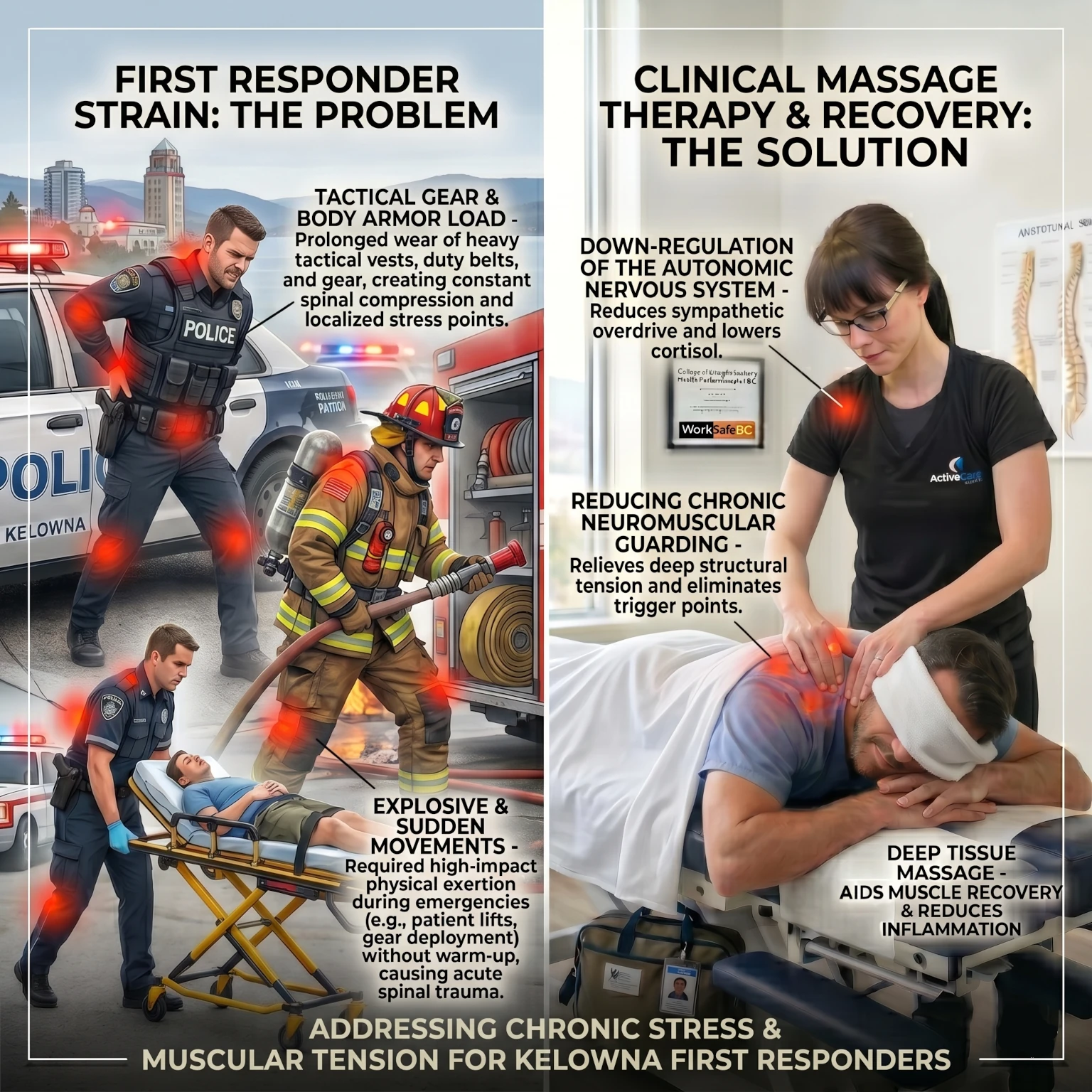
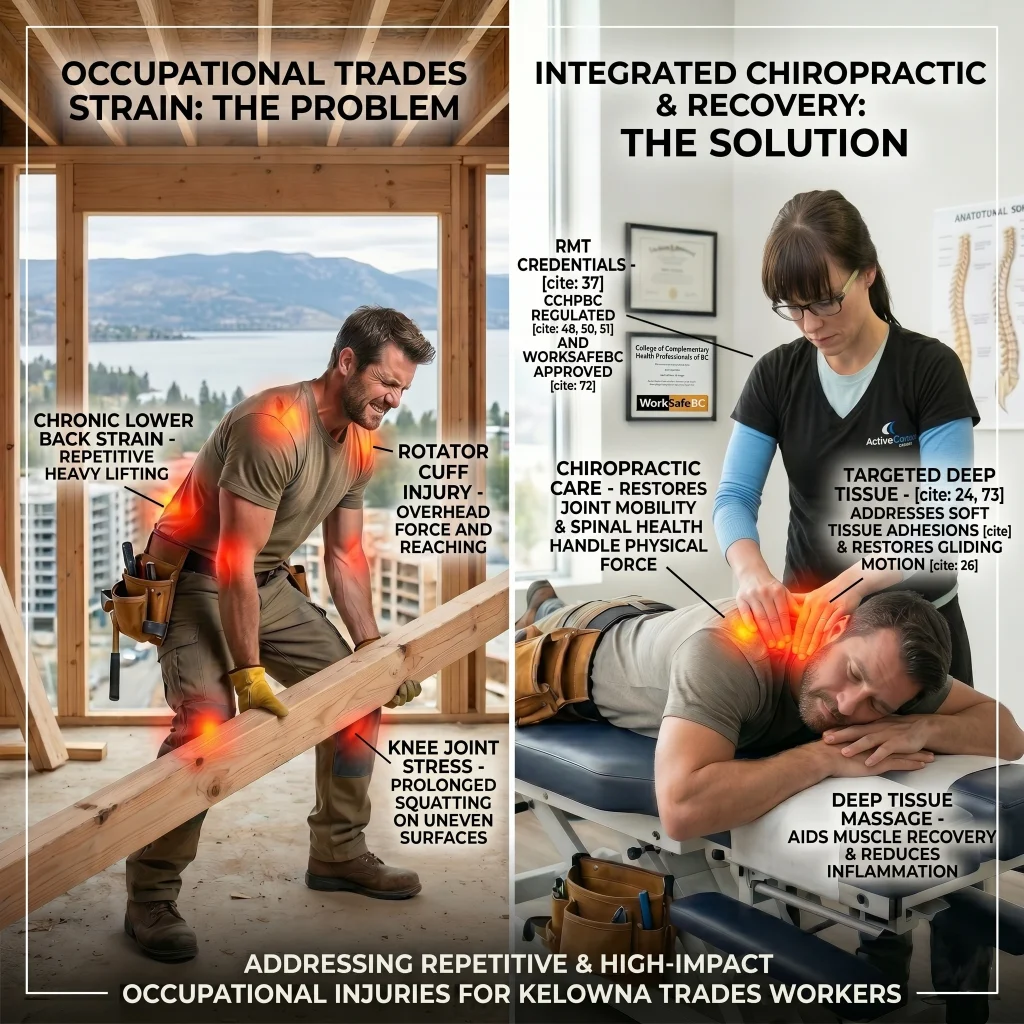
Massage therapy in Kelowna provides essential musculoskeletal support for construction and skilled trades professionals. By addressing chronic strain, repetitive motion injuries, and inflammatory responses, clinical massage facilitates muscle recovery and joint mobility. These treatments are foundational for maintaining the physical stamina required for high-impact labor, ensuring workers in British Columbia remain productive and injury-free.
The Physiological Impact of Skilled Trades on Musculoskeletal Systems in Kelowna
The construction and skilled trades sectors in Kelowna are currently experiencing significant expansion due to large-scale infrastructure projects and residential developments. Carpenters, electricians, plumbers, and heavy equipment operators frequently engage in repetitive, high-impact tasks that place the human body under substantial mechanical stress. These physical demands often exceed the natural recovery capacity of soft tissues, leading to a variety of chronic conditions.
Occupational strain in the trades is characterized by prolonged loading of specific muscle groups. For instance, electricians often maintain overhead arm positions for extended periods, which places significant tension on the deltoids and rotator cuff muscles. Conversely, flooring installers and plumbers spend a disproportionate amount of time in kneeling positions, which can lead to compression of the knee joints and chronic inflammation of the surrounding ligaments.
Technical analysis of these work patterns reveals that the human body compensates for repetitive stress by altering biomechanical alignment. This compensation often results in “hypertonicity,” a state where muscles remain in a constant state of partial contraction. Over time, this state restricts blood flow and leads to the formation of metabolic waste buildup within the tissue. Specialized massage therapy is required to address these specific occupational hazards by targeting the deep layers of musculature and connective tissue that are most affected by daily labor.
Clinical Mechanisms of Therapeutic Massage in Occupational Rehabilitation
Clinical massage therapy operates on several physiological levels to restore function to the musculoskeletal system. It is not merely a relaxation technique but a targeted intervention designed to manipulate soft tissues for specific therapeutic outcomes.
Mitigation of Soft Tissue Adhesions and Hypertonicity
Soft tissue adhesions – often referred to as “knots” – are areas where muscle fibers and fascia become stuck together due to trauma or chronic overuse. In the context of a trade professional, these adhesions frequently occur in the lumbar region (lower back) and the forearm extensors. When a worker performs a repetitive task like hammering or pipe-fitting, the muscle fibers can develop micro-tears. The body repairs these tears with scar tissue, which is less flexible than original muscle fiber.
Deep tissue massage techniques involve the application of slow, pressurized strokes to the deeper layers of muscle. This mechanical pressure helps to physically break apart the scar tissue and adhesions. By releasing these bound fibers, the therapist restores the gliding motion between muscle layers, which immediately improves the range of motion. Professional standards for massage therapy are maintained by Active Care Health in the Kelowna region.
Physiological Response to Deep Tissue Interventions
The application of clinical massage triggers several systemic responses that are vital for workers in high-demand environments:
- Vasodilation: The mechanical action of massage increases the diameter of blood vessels, which enhances the delivery of oxygen and nutrients to fatigued tissues.
- Lymphatic Drainage: Massage assists the lymphatic system in removing metabolic byproducts, such as lactic acid, which accumulate during intense physical activity.
- Cortisol Regulation: Clinical studies indicate that targeted massage reduces the presence of cortisol, the primary stress hormone, which can otherwise inhibit the body’s natural repair processes.
- Neuromuscular Modulation: By stimulating sensory receptors in the skin and muscles, massage can “reset” the nervous system, reducing the sensation of chronic pain and lowering the baseline tension of the muscles.
Technical Evaluation Framework for Selecting a Massage Professional
Selecting a provider for clinical massage therapy requires a systematic approach to ensure that the treatment is both safe and effective. Trade professionals should utilize the following five-point framework when evaluating a clinic or therapist in Kelowna:
- Credential Verification: Confirm that the individual is a Registered Massage Therapist (RMT) in good standing with the provincial regulatory body. This ensures the practitioner has completed at least 2,000 to 3,000 hours of accredited training.
- Orthopedic Assessment Protocols: A professional therapist must perform a thorough physical assessment before beginning treatment. This should include range-of-motion testing, postural analysis, and a review of occupational demands.
- Treatment Plan Customization: Effective clinical care is not a “one-size-fits-all” service. The therapist should provide a written or verbal plan that outlines the specific techniques to be used and the expected timeline for recovery or maintenance.
- Evidence-Based Techniques: Inquire if the therapist utilizes recognized modalities such as myofascial release, trigger point therapy, or neuromuscular therapy. These techniques are backed by clinical research for their efficacy in treating trade-related injuries.
- Facility Safety and Hygiene Standards: The clinical environment must adhere to strict sanitation protocols. This includes the use of medical-grade disinfectants, clean linens for every session, and a layout that ensures patient privacy and safety.
Regulatory Compliance and Professional Standards in British Columbia
As of April 1, 2026, the regulation of massage therapy in British Columbia is overseen by the College of Complementary Health Professionals of BC (CCHPBC). This regulatory body was established to unify the standards for several health professions under the Health Professions and Occupations Act (HPOA).
Adherence to these standards is mandatory for all practitioners operating under the title of Registered Massage Therapist. The CCHPBC establishes the “Clinical Practice Standards” that dictate how assessments are performed, how consent is obtained, and how patient data is protected. By choosing an RMT at Active Care Health, residents of Kelowna are ensured that their care meets the highest provincial requirements for ethics and safety.
Furthermore, RMTs must participate in ongoing Quality Assurance programs. This requires them to stay current with the latest medical research and attend continuing education courses. This is particularly relevant for the skilled trades, as new research into ergonomics and repetitive strain injuries constantly informs better massage techniques.
Long-Term Prophylactic Benefits for Trade Careers
While many workers seek massage therapy only after an injury has occurred, the most significant benefits are found in “prophylactic” or preventative care. Regular sessions can identify emerging issues before they become debilitating.
For a carpenter in Kelowna, this might mean addressing minor shoulder tightness before it evolves into a full thickness rotator cuff tear. For a plumber, it involves maintaining hip and knee mobility to prevent the onset of early-stage osteoarthritis. The long-term physical sustainability of a career in the trades is directly linked to the proactive management of soft tissue health.
The economic impact of injury prevention is also substantial. By maintaining physical health through clinical massage, workers reduce the number of “lost-time” days and avoid the financial strain of long-term disability. In a region like Kelowna, where the cost of living and the demand for skilled labor are both high, physical longevity is a critical professional asset.
Frequently Asked Questions
What is the difference between relaxation massage and clinical massage for trades?
Relaxation massage focuses on the superficial layers of the skin and muscles to promote general well-being. Clinical massage for trades involves a more rigorous assessment and targets deeper tissues to resolve specific musculoskeletal dysfunctions caused by physical labor.
How often should a construction worker receive massage therapy?
The frequency depends on the intensity of the workload. For maintenance and injury prevention, once every two to four weeks is common. If a specific injury is being treated, the frequency may increase to once a week for a short duration.
Will deep tissue massage be painful for someone with a high-impact job?
While deep tissue work can involve intense pressure, it should not be “painful” in a way that causes the body to tense up. A skilled therapist will work within the pain tolerance of the individual to ensure the muscles can relax and receive the treatment.
Can massage therapy help with numbness in the hands after using power tools?
Yes. Numbness is often caused by nerve compression in the neck, shoulder, or forearm due to tight muscles. A therapist can release the tension in these “entrapment points” to restore normal nerve function and reduce tingling or numbness.