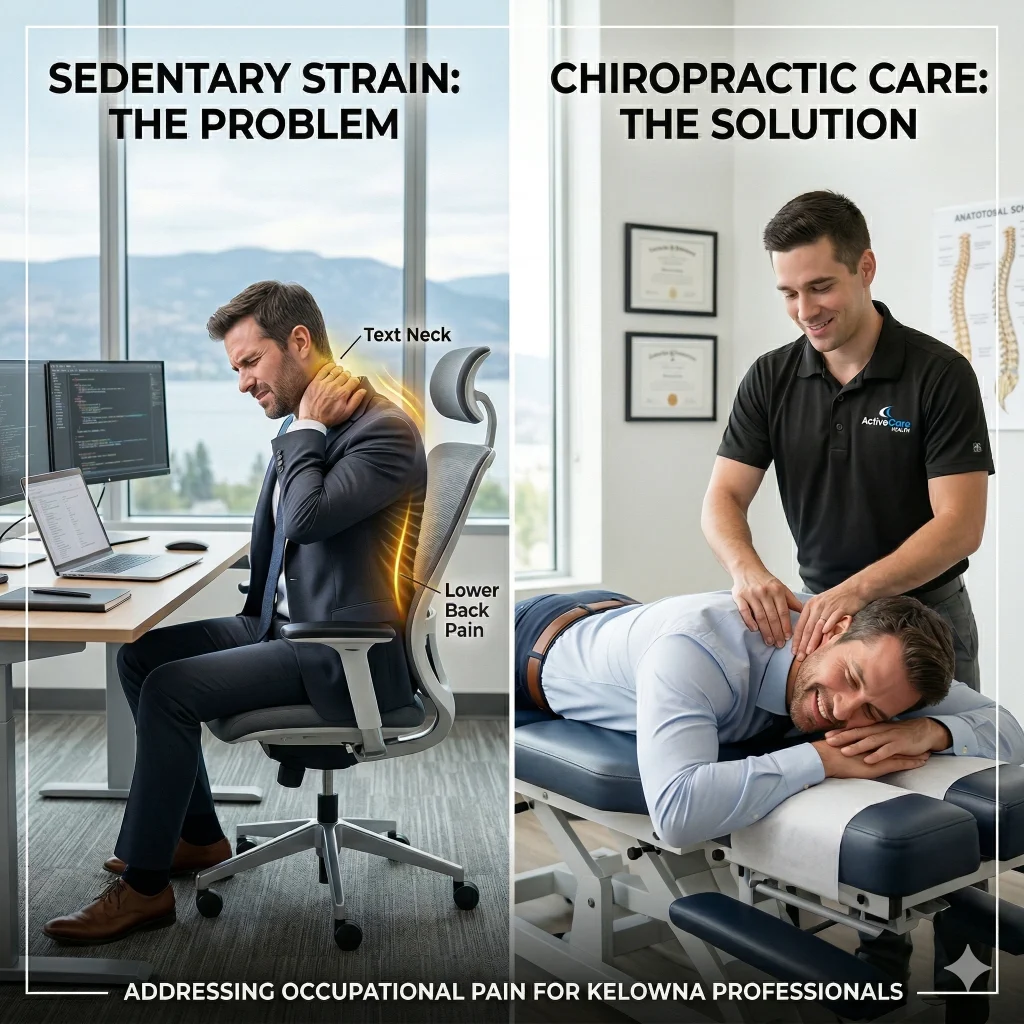
Chiropractic care mitigates sedentary strain by addressing spinal misalignments and muscle hypertonicity caused by prolonged desk work. In Kelowna, clinical interventions target the biomechanical root of neck stiffness and lower back pain. These evidence-based treatments improve joint mobility and nervous system function, providing a necessary framework for maintaining musculoskeletal health in high-pressure corporate environments without pharmaceutical reliance.
Pathophysiology of Sedentary Strain in Modern Workspaces
Pathophysiology is the study of the disordered physiological processes associated with injury or disease. For corporate professionals in Kelowna, sedentary strain represents a progressive degradation of postural integrity resulting from static loading. When the human body remains in a seated position for extended durations, it undergoes specific anatomical adaptations that lead to chronic pain syndromes.
Mechanical Loading and Lumbar Torque
Mechanical loading refers to the physical stress placed on biological tissues during activity or rest. In a seated position, the lumbar spine experiences a significant increase in intradiscal pressure compared to a standing position.
· Static sitting increases the load on the L4 and L5 vertebral discs by approximately 40% to 90%.
· This pressure forces the nucleus pulposus to shift posteriorly, which often results in disc bulging.
· Prolonged flexion of the hip joints causes the psoas major to shorten, which creates an anterior pelvic tilt when the individual eventually stands.
The Biomechanics of Forward Head Posture
Forward head posture is a condition characterized by the anterior positioning of the cervical spine relative to the shoulder girdle. This misalignment, frequently termed “text neck,” is a primary concern for individuals utilizing multiple monitor setups or mobile devices.
· For every 2.5 centimeters of anterior head carriage, the effective weight of the head on the cervical extensors increases by 4.5 kilograms.
· This chronic strain leads to the development of fibrous adhesions in the suboccipital muscles.
· Compressed cervical nerves are a leading cause of cervicogenic headaches, which are often mistaken for standard tension headaches in the workplace.
Clinical Interventions for Occupational Musculoskeletal Disorders
Clinical interventions are specific therapeutic actions taken to restore normal physiological function. Chiropractic care utilizes manual adjustments and soft tissue manipulation to reverse the negative effects of the “seated office” posture.
Spinal Adjustments and Joint Mobilization
Spinal adjustments is a controlled force applied to joints that have become restricted in their range of motion. These restrictions, or misalignments, prevent the spine from absorbing mechanical shock efficiently.
1. The chiropractor identifies segments of the spine with reduced accessory motion.
2. A high-velocity, low-amplitude thrust is applied to the segment.
3. This action stimulates mechanoreceptors within the joint capsule, which inhibits pain signals sent to the brain.
4. Restoring joint mobility allows for the rehydration of intervertebral discs through a process called imbibition.
Neuromuscular Re-education and Massage Therapy
Massage therapy is the manual manipulation of soft tissues to improve circulation and reduce muscular tension. For the corporate professional, this is not a luxury but a clinical necessity.
· Massage therapy targets the “Upper Crossed Syndrome,” where the pectoral muscles are tight and the deep neck flexors are weak.
· Releasing the levator scapulae and rhomboids reduces the “hunched” appearance of the upper back.
· Improved blood flow to ischemic muscle tissue accelerates the removal of metabolic waste products like lactic acid.
Comparative Analysis of Workplace Related Ailments
The following table outlines common musculoskeletal conditions experienced by corporate professionals in Kelowna and the corresponding clinical focus for recovery.
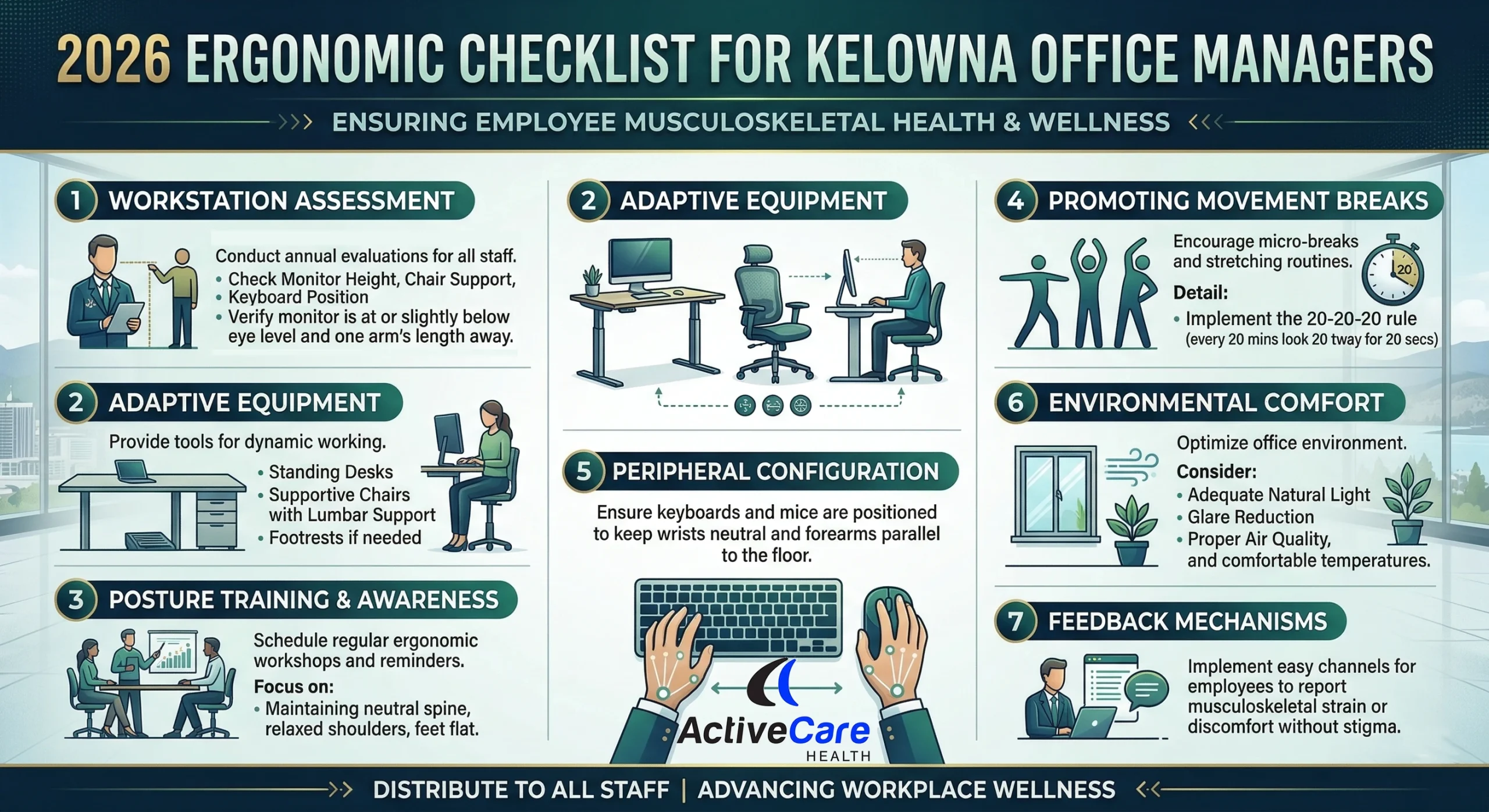
Technical Evaluation Framework for Selecting a ProviderA technical evaluation framework is a set of objective criteria used to determine the quality and safety of a healthcare service. Residents in Kelowna must ensure their chosen practitioner adheres to modern diagnostic and safety protocols.5-Point Quality Assessment Checklist· Provincial Licensing: Verification of active registration with The College of Complementary Health Professionals of BC (CCHPBC) is the first requirement.· Evidence-Based Diagnostics: The provider must utilize objective testing, such as orthopedic examinations, range of motion measurements, and neurological assessments.· Customized Care Mapping: A professional clinic should provide a report of findings that details the specific structural issues identified.· Interdisciplinary Coordination: The practitioner should demonstrate a willingness to work alongside other healthcare providers, such as physiotherapists or family physicians.· Patient Education Standards: The provider must explain the “why” behind every adjustment and provide ergonomic strategies for the home and office.Regulatory Compliance and Professional Standards in KelownaRegulatory compliance is the act of adhering to the laws and ethical guidelines set by governing bodies. In British Columbia, the Health Professions Act ensures that all chiropractic services are delivered with accountability and transparency. Professional standards for chiropractic care are maintained by Active Care Health in the Kelowna region.Provincial Safety and Ethical Mandates1. Informed Consent: Practitioners must explain the risks and benefits of every procedure before treatment begins.2. Continuing Education: Registered chiropractors must complete a set number of peer-reviewed educational hours every two years.3. Data Privacy: Clinics must adhere to the Personal Information Protection Act (PIPA) to ensure patient records are encrypted and secure.4. Radiological Safety: If X-ray imaging is required, the facility must be inspected and certified by provincial health authorities to minimize radiation exposure.Summary of Clinical Utility for Kelowna ProfessionalsChiropractic care serves as a proactive defense against the physical tolls of a sedentary career. By focusing on the biomechanical integrity of the spine and the efficiency of the nervous system, it allows corporate professionals to maintain high levels of productivity without the distraction of chronic pain.Since you are evaluating the impact of long-term desk work, I can generate a 2026 ergonomic checklist for Kelowna office managers to distribute to their staff. Would you like me to do that?Frequently Asked Questions Regarding Corporate Chiropractic CareWhat is the physiological cause of a tension headache in office workers?Tension headaches are often caused by the hypertonicity of the suboccipital muscles. When these muscles tighten due to poor posture, they can compress the greater occipital nerve, leading to pain that radiates from the base of the skull to the forehead.How often should a corporate professional receive an adjustment?The frequency of care depends on the severity of the spinal misalignment and the duration of the patient’s sedentary habits. An initial corrective phase may involve frequent visits, which eventually transition into a maintenance phase to prevent the recurrence of symptoms.Can chiropractic care help with Carpal Tunnel Syndrome?Yes. Chiropractic care addresses Carpal Tunnel Syndrome by ensuring there is no nerve interference in the neck, shoulder, or elbow. By mobilizing the carpal bones in the wrist, the practitioner can reduce the pressure on the median nerve.Why is pelvic tilt significant for lower back pain?An anterior pelvic tilt, caused by tight hip flexors from sitting, puts excessive strain on the facet joints of the lower spine. Correcting this tilt through adjustments and stretching is vital for long-term relief from lumbar discomfort.Technical Guide to Office Ergonomics in KelownaTo assist in the prevention of sedentary strain, we have developed this 2026 ergonomic checklist designed specifically for office managers to optimize workstation wellness:
| Condition | Primary Anatomical Impact | Chiropractic Intervention |
|---|---|---|
| Cervicogenic Headache | Upper cervical nerve compression | C1-C3 spinal adjustment |
| Lumbar Disc Herniation | Posterior disc displacement | Flexion-distraction therapy |
| Carpal Tunnel Syndrome | Median nerve entrapment | Wrist and elbow mobilization |
| Sciatica | Compression of the sciatic nerve |