Chronic pain is a complex and often debilitating condition that affects every aspect of a person’s life, from their ability to work to their enjoyment of leisure activities. For many residents in the Okanagan Valley, the journey to find relief involves a frustrating cycle of appointments that provide only temporary solutions. You might visit a massage therapist to work out a knot in your shoulder, only to have the tension return within days. Alternatively, you might see a chiropractor to correct a stiff neck, but find that the adjustment does not hold as long as you had hoped.
The reason for these partial successes is that chronic pain rarely stems from a single source. It is almost always a combination of structural issues and soft tissue dysfunction. When you treat only one aspect, you leave the other unaddressed, allowing the cycle of pain to continue.
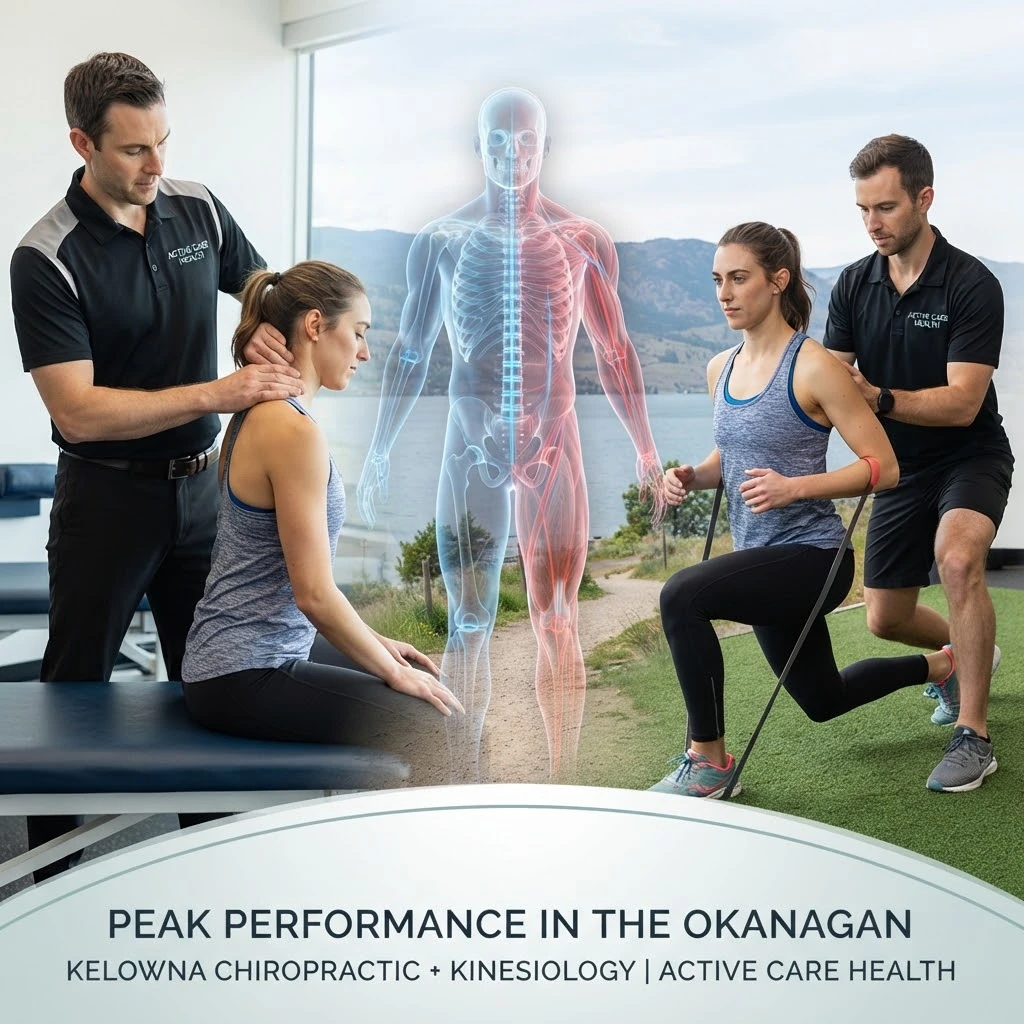
At Active Care Health in Kelowna, we have developed a multi-disciplinary approach inspired by an Olympic village experience. This integrated model combines the structural expertise of chiropractic care with the soft-tissue manipulation of therapeutic massage. By addressing both the skeleton and the muscular system simultaneously, we create a synergistic effect that offers far superior results than either treatment could achieve alone. If you are looking for a Kelowna Chiropractor who understands the importance of a holistic, team-based approach to health, this article explains why integrating these two powerful therapies is the key to lasting relief.
Understanding the Cycle of Chronic Pain
To understand why the combination of chiropractic and massage is so effective, it is necessary to first understand the mechanics of chronic pain. The human body is an interconnected system of pulleys (muscles) and levers (bones). They do not operate in isolation; they are intrinsically linked.
When a joint in your spine or extremities becomes misaligned or restricted – a condition which chiropractors often refer to an obstruction – it can cause dysfunction to surrounding nerves. This structural misalignment signals the brain that there is a problem. In response, the brain triggers a protective mechanism known as “muscle guarding.” The muscles surrounding the affected joint tighten up to splint the area and prevent further injury.
While this is a helpful short-term defense mechanism, it becomes a major problem when it persists. The tight muscles restrict blood flow, leading to the accumulation of metabolic waste products like lactic acid, which causes further pain and inflammation. This increased muscle tension then pulls on the skeletal structure, reinforcing the misalignment. It becomes a vicious cycle: the misalignment causes muscle tension, and the muscle tension locks the misalignment in place. Attempting to break this cycle by addressing only the bones or only the muscles is often an uphill battle.
Chiropractic Care: Restoring the Structural Foundation
Chiropractic care serves as the structural foundation of the treatment provided by Active Care Health. The primary focus of a chiropractor is the health of the nervous system and the proper alignment of the musculoskeletal system. Through the use of spinal adjustments a chiropractor applies controlled force to a specific joint.
The goal of the adjustment is to restore proper motion to a joint that has become “stuck” or restricted. When joint mobility is restored, several physiological changes occur:
- Improved Nerve Function: Misaligned joints can cause dysfunction on the delicate nerves exiting the spine. Correcting this alignment allows the nervous system to function without interference.
- Improved Range of Motion: An adjustment mechanically breaks up adhesions in the joint capsule, allowing you to move more freely.
- Pain Modulation: The physical act of adjustment stimulates mechanoreceptors in the body, which can effectively block pain signals from reaching the brain.
However, even the most skilled Kelowna Chiropractor faces a challenge if the surrounding soft tissues are ignored. If the muscles pulling on the vertebrae are essentially “frozen” in a state of spasm, they will fight against the adjustment, potentially pulling the joint back out of alignment shortly after you leave the clinic. This is where the integration of therapeutic massage becomes critical.
Therapeutic Massage: Preparing the Canvas for Healing
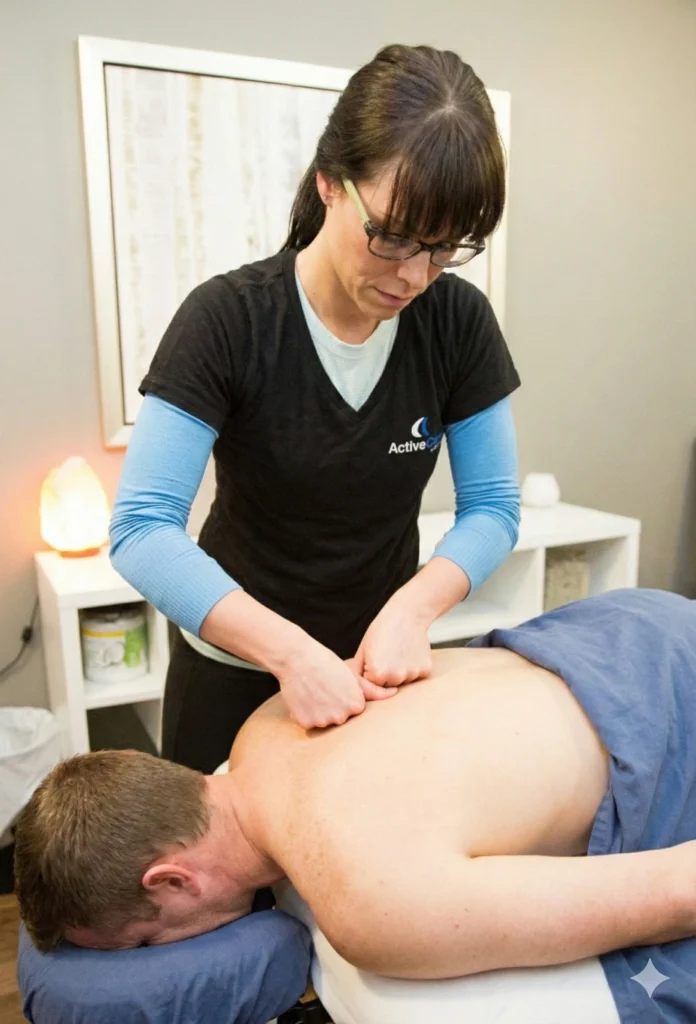
While chiropractic care addresses the “hard” tissues (bones and joints), therapeutic massage addresses the “soft” tissues (muscles, tendons, ligaments, and fascia). Therapeutic massage is distinct from the relaxation massage you might receive at a spa. It is a clinical modality focused on specific medical outcomes.
Therapeutic massage works to:
- Increase Circulation: Massage techniques physically pump blood through the tissue, delivering oxygen and nutrients while flushing out toxins and metabolic waste.
- Release Trigger Points: It targets hyper-irritable spots in the skeletal muscle, commonly known as knots, which can refer pain to other parts of the body.
- Improve Elasticity: By manually manipulating the fascia and muscle fibers, a massage therapist can lengthen tissues that have become shortened and tight due to chronic posture issues or injury.
When completed by a registered massage therapist at Active Care Health, massage is not just about feeling good; it is about preparing the body to accept and hold structural changes. It turns the muscles from a rigid barrier into a pliable support system.
The Synergy: Why 1 + 1 Equals 3
The true power of the Active Care Health plan lies in the timing and coordination of these two therapies. When you combine chiropractic care and therapeutic massage, the clinical benefits are amplified. This is why the multi-disciplinary approach is the gold standard for treating conditions like sciatica, lower back pain, tension headaches, and whiplash.
How Massage Enhances Chiropractic Adjustments
When you receive therapeutic massage prior to your chiropractic adjustment, you are essentially “warming up” the body. The massage relaxes the deep muscle spasms that are guarding the spine. This has two profound effects on the subsequent chiropractic treatment:
- Easier Adjustments: Because the muscular resistance is reduced, the chiropractor can perform the adjustment with less force. This makes the experience gentler and more comfortable for the patient.
- Greater Effectiveness: With the muscles relaxed, the chiropractor can often achieve a deeper and more complete release of the joint restriction. The “fight” between the doctor and the patient’s tension is eliminated.
How Chiropractic Enhances Massage Therapy
Conversely, chiropractic care makes massage therapy more effective. If an underlying structural misalignment is present, the muscles are tightening as a symptom of that problem. A massage therapist can work a tight muscle for an hour, but if the bone underneath it is shifted, the muscle will tighten up again almost immediately to protect the joint.
By ensuring proper skeletal alignment, the chiropractor removes the need for the muscles to guard the area. This allows the relief provided by the massage to last significantly longer because the root cause of the tension has been resolved.
The Active Care Health Experience in Kelowna
At Active Care Health, we do not view your body as a collection of separate parts to be treated by separate people who never communicate. We view you as a whole person. Our model relies on active communication between your Kelowna Chiropractor and your Registered Massage Therapist (RMT).
When you choose this integrated path, your providers consult on your specific case. They share insights regarding your range of motion, your pain thresholds, and your progress. This ensures that the treatment plan is cohesive. For example, if the chiropractor identifies a pelvic tilt that is causing lower back pain, they can instruct the massage therapist to focus specifically on the psoas and gluteal muscles that contribute to that tilt.
This level of coordinated care removes the guesswork from your recovery. It transitions your treatment from reactive pain management to proactive correction. By treating the bone and the muscle, the structure and the function, the Active Care Health treatment plan offers the highest probability of breaking the chronic pain cycle permanently.
Lasting relief is not found in a pill, and it is rarely found in a single-discipline isolation. It is found in a comprehensive strategy that respects the complexity of the human body. By combining the precision of chiropractic adjustments with the restorative power of therapeutic massage, you provide your body with everything it needs to heal, align, and thrive.
Frequently Asked Questions
Is it safe to receive a therapeutic massage and a chiropractic adjustment on the same day?
Yes, it is entirely safe and recommended to receive both treatments on the same day. In fact, receiving them back-to-back often yields the best results. The massage warms up the soft tissues and reduces muscle tension, which allows the chiropractor to perform a gentler and more effective adjustment. This combination is a cornerstone of the integrated approach at Active Care Health.
How long do I need to continue the combined treatment before I experience lasting relief?
The timeline for lasting relief varies depending on the severity and duration of your condition. However, most patients report feeling a significant difference within the first few sessions. Because the combined approach addresses both the root structural cause and the muscular symptoms, recovery is often faster than using one therapy alone. Your practitioner will outline a specific treatment plan during your initial consultation.
Which service should I receive first, the massage or the adjustment?
While the order can depend on the specific preference of the practitioner and the needs of the patient, it is generally most effective to receive the therapeutic massage first. The massage helps to relax the muscles and reduce inflammation, which prepares the body for the chiropractic adjustment. This sequence ensures that the skeletal correction is not fighting against tight, guarding muscles.
Does my health insurance cover both chiropractic care and therapeutic massage?
Most extended health benefit plans in British Columbia categorize chiropractic care and registered massage therapy as separate distinct coverages. This means you typically have a specific dollar amount or number of visits available for chiropractic, and a separate amount for massage therapy. It is important to check your specific policy details to understand your coverage limits for each service.
What specific conditions respond best to the Active Care Health combined approach?
The combined approach is highly effective for a wide range of musculoskeletal conditions. It is particularly beneficial for chronic lower back pain, neck pain, tension headaches, sciatica, and repetitive strain injuries. It is also excellent for treating whiplash from motor vehicle accidents and sports-related injuries, where both soft tissue damage and structural misalignment are present.